Thursday, October 30, 2014

Works in Progress

I am reading so many, many books right now, most of them really enjoyable.  But it means I haven't finished anything in a while, so here are a few opinions-in-progress.

I'm reading Sayed Kashua's Second Person Singular for book club, and I hated the beginning and am enjoying it a bit more now.  I think the key problem is that I hated the protagonist for the first part.  God, I don't think I've ever hated someone for being bourgeoisie before, but there it is.  And I keep in mind that it's another country--the book is about Arabs living in Israel--and there's a lot going on, but I think that a combination of not fully grasping a very complex culture and the fact that yeah, this first character's kind of a casually misogynistic, materialistic yuppie jerk and yeah, I hated it.

Part two has a different narrator, which also has its moments of discomfort, but which so far is much more likeable.  So I hold out hope for the book.  But I have to say, books that are about and from the point of view of men that are about how women, acting like women, mess up their lives--I'm sorry, but I'm just done with it.

Because of book club, I'm spending the most time on that one, but there are some other serious winners pulling me this way and that.  The Walled City, by Ryan Graudin, is an ARC that I got, and I'll have a real review when I get more than halfway through it, but it's really great.  It's got the feel of fantasy--urchins living in the poor part of the city trying to find what they need--a better life, freedom, family.

Only, I don't think it's fantasy.  The "real world" outside their poor enclave is, I think, the modern world.  There's no magic.  It's just a story of poverty and bravery and harsh conditions, and connections and all kinds of other great things.

I also just got Being Mortal from the library, which is Atul Gawande's newest book about the place of medicine in society and life.  Better and Complications are both excellent books that I highly recommend (as is The Checklist Manifesto, which is small and mostly a manifesto but compelling!), and I've only just started this but I can already tell that it has that soothing, logical, human touch that makes Atul Gawande's writing such a pleasure to read. 

What else?  So much.  So, so much.  Another ARC, this one of short stories by Kelly Link called Get in Trouble.  As not-really-a-short-story-reader, I'll say that it's pretty great.  Two audiobooks--because the excellent performance of Sarah Waters' The Paying Guests was killing me with the tension, so I switched over to a YA fantasy that I was only half interested in but that keeps coming up, Birthmarked.  It's fine--not great, maybe not even very good, but fine.  I mean--I don't know.  It's probably the weakest one on the docket right now.

All very exciting.  In other news, I think November is going to be following the two posts per week schedule that I followed this week--Tuesday/Thursday--so that I can keep up with NaNoWriMo.  I might have little update posts in between (heck, my real posts might be all about NaNo!), but I'd like to try to blog at least a little along the way.

Plus, I'm already so backed up on books I'm INCREDIBLY! EXCITED! TO READ! that I'm going to need to post those really soon.  Because the notion that I might forget to squirm with excitement about reading more Miles Vorkosigan books causes me genuine bouts of anxiety!

Happy Halloween!

Tuesday, October 28, 2014

Yet More Comics

 Okay, first the good news, then the bad news.  To wit:

Rat Queens, where have you been all my life? This comic is amazing, and while I'm excited to get in on the ground floor, I'm also in agony that there isn't a whole backlog of them to go through before I have to start twiddling my thumbs and waiting for the newest issue. 

The cover blurb gives you the run down--it's your standard team of adventurers: an elf mage with some great tattoos, an atheist human cleric, a dwarf fighter (shaving your beard used to be a statement, not just a fad), and a smidgen thief who's kind of a hobbit and kind of a hippie and very much into magic mushrooms if you know what I mean.  These ladies are looking for trouble, but when it comes in the form of a bar brawl, their community service assignment ends up to be closer to fatal than is really reasonable for a misdemeanor, and the Rat Queens have to figure out who's out to get them.

This book is so funny, and so smart, and so modern, and yet so true to your classic D&D lifestyle.  The characters are so likeable, and they have each other's backs, and they all have complicated families but they have each other and that's all they need.  The world is charming and scary and fascinating.  The men are hunks and everyone is just so likeable and I want to read this book again and again and again.

Finally, I'll point out that the first volume as linked to above is only about $7 and well worth it.  Hell, I'm pretty sure I'm going to buy myself a copy, AFTER I already read it.  That good.  Go read this book now.

Ah, but the bad news.

I Was the Cat, by Paul Tobin, is an ARC I got kind of an age ago from Netgalley.  It's kind of promising premise, but it's execution is really awkward.  It's like Forrest Gump if Forrest Gump was evil. And immortal. And a cat.

So this news blogger whose last name is Breaking (because her blog is Breaking News, get it?) and whose first name is maybe Alison?  I've forgotten since yesterday.  Anyway, she's been hired to ghostwrite someone's memoirs, and her friend accompanies her to make sure it's not an axe murderer.  Turns out it's a talking cat, and we spend some time with our heroines being all "OMG a talking cat!" 

Now, I love a good hypothetical--seriously, if you ACTUALLY met a talking cat, how would you react?  But this is not about subtleties of how your entire worldview shifts when the nature of reality and the definition of "possible" are opened up.  This is about OMG a talking cat!!!

So then we get them listening to Salem's--I mean Burma's life story.  His lives, really--presumably  nine of them, though I didn't count.  He explains that his whole lifespan has been about trying to take over the world, and then he talks about all the different powerful leaders he knew (famous and not) and how he was the brains behind their attempts to take over the world.  And the girls giggle and are all like, "oh, you cute talking kitty with your monomaniacal ways!"

And in between these bits, we get glimpses of Burma's business dealings, which involve food carts in London and owning hospitals and threatening and maybe killing people?  He's totally trying to take over the world now!  OMG!  What will happen?  Do we care?  Do the girls care? 

Nope.  It's like there was a good idea for a story here but nobody wrote it.  "Something interesting about Napolean here" is practically written in the caption box under the pictures. 

So yeah, skip this one.  Even if you love cats.  Or want to take over the world.  May I suggest Lolcats and The Art of War, respectively?

Friday, October 24, 2014

Literary Phone Book Reading

What is the literary equivalent of "I would pay cash money to listed to her read from the phone book?"  Because I used to say that about actors I loved (hell, I still might give a nickel to Matt Smith if he'd read me a couple pages from the W's), but I kind of think this describes how I feel about Rainbow Rowell.

As you may know, I loved Fangirl and Eleanor & Park, and I found Attachments charming when I suspended disbelief and my squick reflex regarding the stalky overtones.  So I figured Landline would be fine, even if the crumbling marriage aspect seemed really too depressing to be redeemed by her ability to charm me.  I went in figuring it would be a charming veneer on a total bummer of a story, probably with a pasted-on upbeat ending.

Well, I have my thoughts on the ending, but I should never have underestimated Rowell.  Georgie McCool, the improbably named heroine (kind of?) of this novel, is infuriating and lovable at the same time, and her problems are big and both inevitable and caused by her own bad choices, and this book says SO MANY things about relationships that I keep getting sidetracked from the many thoughts it has generated on magic phones and the ability to change the past.

Okay, so short story: Georgie is married to the love of her life, Neal, who is a stay-at-home dad to their two young daughters. She's also incredibly passionate about her career as a TV writer, and she and her writing partner/best friend, Seth, have the chance of a lifetime--to pitch their pet project, the show they've been dreaming of and working toward for years, to a very interested producer.

Only problem: they have a TON of work to do before the meeting in on week.  And it's Christmas.

When Georgie tells Neal she has to work over Christmas, she figures she's ruining the holiday by canceling their trip to see Neal's family in Omaha.  But instead, Neal takes the kids and goes without her, and Georgie isn't quite sure what this means about their relationship.  But when she tries to call Neal in Omaha on the old landline at her mother's house, she gets Neal in Omaha--only not her Neal.  Young Neal, a Neal who hasn't proposed to her yet.  She talks with Neal in the past, trying to get a feel for what's wrong with her marriage, and how it could have gone differently, and whether there is any way that two people who are fundamentally Georgie and Neal can ever really be happy together.

Okay, this is already a long post and I'm just finishing up with the premise of this book.  There are SO many things I want to talk about.  Someone I was talking to was saying that they didn't think it would be a good book club book, but I think it would be an AMAZING book club book, provided you had a certain type of book club.  No book club I've ever been in has fit the profile, though: my old ones were too literary, reading novels from a writerly/lit crit point of view, while my new one is composed primarily of single people about 8 years younger than me.   But the prototypical book club I picture--married ladies with kids meeting mostly to gossip and dish and talk about how they liked the book--could get a LOT of mileage out of this.

And because I have SO MANY THINGS TO SAY, we're doing them discussion guide style.  I love numbered lists--they save so much trouble in organizing your thoughts.

1) Start off with a softball: if you had a magic phone--well, the obvious question is who would you call, but what I want to know is, who would you tell?  Would you try to convince someone?  Would you think you were going crazy?  Would you try to document it scientifically or just start dialing?

2) Did you feel, as I did, that Neal going to Omaha without her was the obvious solution and not a crisis?  I mean, there's a crisis going on--he's mad, and she deserves it, I think--but it's not this Christmas that's the problem.  If you spend 15 years showing up in your marriage, choosing work one time, even for The Big Holiday, is not the end of the world.  Christmas is the straw that broke the camel's back here, right?

3) So why was Georgie like this?  I mean, yeah, she loves her job, but it's more than that.  You can love your job and show up for your family, even if you don't have a ton of hours.  You can be present.  Where did she go wrong?

4) Answer (and next question): Seth.  Seth, Seth, Seth.  He's the elephant in the room/book, right?  I mean, he's there, but mostly as an object.  To Georgie he's an object; to Neal he's a subject.  Is Neal righter than Georgie?  In college, Georgie was waiting around for him to choose her, and I'm betting he'd have kept her hanging for decades while he went through hot babes, had she not chosen Neal.  But did she, really.  Does Seth get more of the best parts of Georgie than Neal does--not her work, but Seth?

5) I think this marriage could be interpreted in more than one way.  I felt like Georgie had been screwing up for years, but I've heard it said that she gave up a lot for Neal, and that's not how it looks to me.  How much variability do you imagine in people's responses to this?


6) Really, it's Neal who screwed up by choosing Georgie, right?  She's the one who came with requirements, and he chose to take them on.  The fact that she blows him off for Seth all the time is on her, but even before this, he knew that she wanted to work as a TV writer and run in those circles, and he hated it, and he signed up for it.  Jesus, it just gets more impossible the more I think about it.

7) The ending.  Too pat, or way too pat?  It's like all these complicated, impossible questions that are set up are solved at the end of the half hour.

Really, the book is kind of glib.  It's like it was written for TV--honestly, it might make a decent rom-com, if a mostly-unhappy married couple nearing 40 could be described as rom-com material.

This is definitely my least favorite Rainbow Rowell book so far, but that's like saying it's my least favorite flavor of ice cream.  If you gave me a cone of peppermint stick, I would still feel only pleased to have ice cream.  Whatever else was going on here, it was fun to read.

And, before I go and while on the subject of Rainbow Rowell, check out this video recreating a really touching scene from Fangirl.  The guy's a bit too old, but still, this is romance.

Tuesday, October 21, 2014

Your Classic Ghost Story

Halloween, right?  Ghost stories.  The Swallow, by Charis Cotter appears on Netgalley and I am attracted to the book--I'm thinking of the creepy Mary Downing Hahn books of my youth.

I didn't quite get what I expected, and I'm not sure if it's because I came to this as an adult and you can't go home again, or if this is a different type of book.  The defining quality of a ghost story, I suppose, is its atmosphere, and atmosphere is what you've got here, most definitely.  In my mind, there is fog in pretty much every scene in this book--possibly even the indoor ones.

Rose is a lonely, sad girl whose parents are rarely home and whose housekeeper dislikes her.  She is strange and quiet, and because she can see ghosts, she is often tense and scared. She feels invisible.

Polly lives next door with her enormous, boisterous family.  All she wants is some privacy, but her twin brothers, the Horrors, are always in her business, and now she shares her room with the new baby.  She loves to read, though--especially ghost stories.

When Polly and Rose discover they are neighbors, the girls form an odd friendship.  But Polly is suspicious of the solitary Rose--could she be a ghost?

The thing about this book is that it's old-fashioned.  It takes place in 1963 (in Toronto, and there's lots of geographic detail), but it reads like a book that was written in 1963.  I found the pacing quite slow, especially for a middle grade book.  Again, it's wonderfully atmospheric, but even one day after finishing, I can't really remember the trajectory of the story--just the two girls and their friendship and the ghost who bothers them, and the ending.

The friendship is especially lovely--I love that Rose isn't particularly interested in making a friend, but Polly's just so out there she hardly notices, and that wins Rose over.  (Could it be because this is the pattern in so many of my social interactions?)  I like how having this friend, this person who really sees her, gives Rose strength and pushes her out of her comfort zone and into what is eventually a much better place.

I will say that I guessed the ending, but I think that was mostly luck.  I tend to speculate, and when you're looking for confirmation of a "surprise" that you expect, you can often find it.  I think it was very well-presented, though--there is a real sense of uncertainty all the way through the book.

I wish I could figure out how kids would feel about this book.  I didn't find it as engaging as I wanted it to be, but I think I've reached a point where middle grade books have to be exceptional to make my hit list.  I think this was a good book for the kind of child reader who love old-fashioned books, like Anne of Green Gables and Betsy-Tacy.  It's much creepier than that, but the sense of place and time reminds me of that kind of classic--only with ghosts!

Sunday, October 19, 2014

Comics Round Up!

First off, okay, I lied about posting this weekend.  It was a crazy weekend; I did the best I could.

But I did manage to finish a lot of books, so let's do some quick comics hits. I feel like I never have a full review-worth to say about a comic, unless I'm reviewing a bunch of volumes at the same time.  But since I have a bunch of first volumes to talk about, may I present:

Graphic Novel Mini-Reviews!

My new favorite thing is Amulet, which is fodder for another post, but it's made me a huge fan of Kazu Kibuishi.  He hasn't written a ton of books, but he's edited a ton of comics anthologies, and I recently read Explorer: The Mystery Boxes, which was quite charming.  As with any anthology, some of the stories were better than others, and I'm pretty sure it was intended for a middle grade audience.  Some of the stories are completely charming--I especially liked Jason Caffoe's "The Keeper's Treasure," about a treasure hunter and the beast who guards the prize, and Rad Sechrist's "The Butter Thief," about a girl who is transformed into a spirit and has to steal a stick of butter from her wily grandmother to win back her form.

But I think my favorite was Emily Carroll's "Under the Floorboards."  Carroll is one of my new favorites, and this story was just the right blend of creepy and clever. 

Morning Glories was listed as a favorite by someone I know online, and the rest of her list read exactly like mine, so I picked it up.  The premise seemed really promising--six oddball teens end up at an elite boarding school that is more than it seemed--but as I started reading, I felt like it wasn't quite coming together.  It was just kind of crazy and a little warped.

Then I read a little further, and I realized, no, this book isn't a little crazy, it's BAT$&*^ INSANE, and it's not off the wall, it's hanging from the ceiling dripping black ichor on your shoulders (metaphorically; no beasties (yet)), and yeah, I'm totally on board now.  The pretense that we were going to take the notion of boarding school seriously when there are attempted murders and actual murders and etc. going on was bugging me, but we left that behind, and now it's about our heroes versus their captors/teachers, and being the rats who can see the maze but can't escape it.  Volumes 2 and 3 are both already acquired.

This next one was an advance copy from Netgalley, and as soon as I requested it I felt a little dirty, because it's about serial killers and the beginning is kind of gross and I know I'm a bit of a sucker for horrifying sensationalism. But I kept reading, and guys, Nailbiter is really, really good.  Like, fast paced and actiony, not spending too much time on the gore, but really about investigation, with very likeable detectives. 

Basically there's this town in Oregon with the unlikely name of Buckaroo and the even more unlikely honor of being the home of 16 separate serial killers in the past 50 years.  This is weird, and when a disgraced FBI agent gets a call from an old friend who claims to have figured it out, he heads out to Buckaroo to meet him.  But the friend is missing, and the most recent killer, the Nailbiter, is out on parole, so the agent teams up with the local sheriff (who dated the Nailbiter in high school) to try to sort things out. 

This summary doesn't cut it--this book is really about the mystery, which is probably supernatural.  There's dying, but very little of it is visually graphic, and it's not particularly grosser than most supernatural detective stories.  I mean, it is violent--I'm not recommending this to people who are averse to serial killer stories.  But I'm really excited about this discovery; can't wait to read more!


Thursday, October 16, 2014

Apologia

I've been on such a roll of blogging regularly that I feel the need to tell you that I can't post a review today; I'm just flat out with work stuff and class parent stuff.  BUT I do have a bunch of comics to review, so I'll try to get a post up this weekend, and back to my regularly scheduled program on Monday!

Just for visual interest, here's a selfie of me and some redwoods from our trip to San Francisco this summer. 


Not particularly flattering, but hey! Redwoods!

Tuesday, October 14, 2014

I Had a Dream

I've been thinking about doing NaNoWriMo this year, but I wasn't sure what to write.  And then I had this crazy dream the other night that might actually have a story in it (though I doubt I can keep the climax where we have to get Jon Bon Jovi to Germany in time to find an interdimensional portal).  So guys, I think I might try to do NaNoWriMo this year.

If I do, I have to do some prep work in the next few weeks.  I don't need a detailed outline, but I need a vague idea of an endgame or I write myself into corners.  I don't understand how everything always turns out okay in most books.  I'm much better at coming up with insurmountable problems than with surmounting them.

Am I crazy?  I think I might be crazy.  But I need to kick into gear, and this might be just the thing.  If I do it, my reading will probably go downhill, though I think I'll probably post here for accountability.  (Speaking of which, hi, Lianna!)

Exciting.  Nervous.  NaNo.

Sunday, October 12, 2014

Conspiracy Facts

This book...I don't know what to make of this book.

Paolo Bacigalupi is someone I've always thought I should read more of.  I loved Ship Breaker; I really want to get to The Drowned Cities sometime soon.  The first few pages of The Windup Girl and was a bit overwhelmed by the world building, so I never finished reading it, but I've begun to suspect that that's a shame and I should really give it a try. 

So I was excited to read an ARC of The Doubt Factory from Netgalley.  (As of this writing, the book's not out yet, so the links go to the free Kindle preview of the book.)  And it confirms my belief that Bacigalupi is a writer I like, even while I can't say I love the book.

How do I feel about it?  Well, it's definitely not bad.  I would say that the first half suffered a little from being dragged out, and I have a guess about that--the pacing of the setup is very much the pacing of a world with a lot of building to do.  This is the first Bacigalupi book that takes place in the here-and-now, and the amount of time spent setting up Alix and her privileged life at her fancy boarding school and happy family is more appropriate to the setup of a world like Ship Breaker, where we need to spend pages on the characters' day-to-day patterns of living because they are so very unfamiliar, and they are the only way we'll come to understand the character.

This book, on the other hand, is an Issue Book (I wish I could remember/find the blog I read that reviewed it recently, because it pointed this out very neatly), and as such it depends on the reality of the world it takes place in.  So all that world building and scene setting starts to feel like back story, and the fact that the actual Point of the book (and the Point of this book has a capital P) is kind of teased for a long time without being explicit starts to become a weakness before that aspect of the storytelling plays itself out. 

(Note that the rest of this review will be a little spoilery thematically, though not plot-wise.)

Not that the action doesn't start out right away.  We begin when Alix, gazing idly out the window of her upper-crust prep school chem lab, sees a guy staring up at the building.  When the principal approaches the guy, he punches him.  The students are intrigued, but that's about it.

Then we spend some time in Alix's life, and there's another incident at school, and Alix realizes that this guy--this group--is targeting her.  Her family gets protection, law enforcement gets involved, and eventually we come around to the Point, and the Issue of this Issue book.

The issue is about how big corporations seriously screw the little guy.  It's about how regulation is inadequate, and business is amoral, and products (especially drugs) are not sufficiently safe, and people make tons of money with lies.  Think Big Tobacco.  Not just ignorance, but lies. 

Now, these are things I believe to be true.  Is this a factor of me being an adult reading a YA book?  I know this is how the world works, and I have no doubt about it.  But it makes the book a little heartbreaking to read, because I feel like I already know the ending--we are not going to bring down corporate America or our fabulous "capitalism as morality" system with one big movement.  The book even makes the point that people who see and point out the "conspiracy" are labeled as nuts, even when they are and can be proven objectively right.

So I feel like this book was trying to open my eyes and mind to an idea that I've already thought about a lot and found an uneasy truce with.  This is a place where a teenager might be motivated to action, or taught a healthy and constructive cynicism, but where I, a (let's admit it) middle aged lady, am left kind of deflated by my inability to connect with the characters' sense of hope.

When it comes down to the story--the characters, the plot--it's very well-told, and I loved a lot of the secondary characters, from Cynthia, Kook, and Tank to Lisa the Death Barbie.  I liked that Alix was really a very typical girl, not a Chosen One or super-special--though Moses's fascination with her from the beginning leaned a bit in that direction, and their fascination with each other was really quite Instalovey.   

I can't tell you the end, because I'm not quite there yet.  I will say that this book has definitely encouraged me to read more Bacigalupi (and I'm starting to love typing his name and saying it out loud: Bacigalupi, Bacigalupi), and that it's cemented that he can build character and construct a story.  This just wasn't the particular story for me.

Thursday, October 09, 2014

Hollow Girl

I will admit that I requested Tin Lily, by Joann Swanson, from Netgalley because it sounded like it might be sensational and melodramatic.  Lily and her mother have left her father, until one night he shows up and shoots her mother.  Now Lily's in mourning and trying to move on to a new life, with the threat of her uncaptured father still hanging over her head.  I'll admit to kind of wanting an angsty thriller.

So any disappointment around those expectations were clearly my own fault; this is a story about someone who's been through loss and trauma and is trying to find her way back to feeling again.  She's hollow and unconnected, without her mother, unable to understand how her once-beloved father has become this horrifying person, hoping that the aunt she's never been close to will keep her.  It's about dissociation and flattened affect, about the inability to feel anything.

The second half of the book is much stronger than the first; in other circumstances, I might have put it down halfway through and given it two stars.  It wasn't bad, per se, but there's not a lot there--a description of events, almost procedural in nature, like someone describing an episode of Law & Order from the point of view of a witness.

Really, it's about dissociation, flattened affect, and the sense of blankness that comes from trauma.  Lily is made of tin because she's light hand hollow, with no room for feeling.  So after a very brief scene of violence at the beginning, there's a LOT of going through the motions, which is not that interesting to read about.  There are a few interesting observations of that sense of hollowness--her use of a thread, or train of thought, to keep herself from thinking the dangerous things, for example--but for the most part it's bare motions being gone through.

I might have put it down halfway through, but it was going quickly and I wanted to review it, so I kept reading, and the end was better.  The process of Lily's healing gets more active--she makes a new friend, gets a good therapist, learns more about her parents' histories.  It's a very mundane story of surviving trauma, which is kind of what I liked about these parts--the therapist is good and trustworthy, her new friend is human and helpful, and the self help book is actually useful.  If she keeps some secrets that would have better been shared, well, her reason is relatively understandable, given her state of mind, and she changes course at a point where a reasonable person should be expected to.

But then, at the end, I got my action when Lily's father shows up to finish the job.  I think Hank is the weak point in the whole thing--by trying to make him both realistic and human, he turned into kind of a parody of irrationality.  He's clearly an alcoholic, but is he also schizophrenic?  He was abused as a child, but how was he just a flat out great guy till he started hanging out with his dad? In trying to show how Lily and her mom could love him and stay with him so long, the frail human and abusive monster and loving dad got all jumbled together, and his psychology actually didn't seem to make much sense to me at all.

I don't know--as I read the book, I felt like it was probably two stars.  By the end, I kind of wanted to give it three.  Looking strictly at the labels Goodreads gives their stars (two is "it was okay" and three was "I liked it"), I think I'd be solidly in 2.5 land.  I haven't decided how many I'll actually give.  I'll be very curious to see what the author does next.

So there's my review.  Do with it as you will. 

Wednesday, October 08, 2014

A Good Story

It's absolutely ludicrous that I should be signal boosting a big name like the Book Smugglers, but they have begun their story publishing endeavor and I want to sing about it to the rooftops.  I've fantasized about this exact thing--soliciting and then publishing just those exact stories that you yourself most would love to read.  If I was the Smugglers, it's what I'd want to do, and I'm just tickled that they're doing it!

So, free today at TheBookSmugglers.com, you can read S.L. Huang's new story, Hunting Monsters, for free.  I bought it a few days ago through their direct link (so I could read it early; see the bottom of their page) or you can buy it on Amazon if you want it on your Kindle (see my link above).  It's really great, highly recommended.

Their first round of stories--this year, this publishing season, what have you--is about subversive fairy tale retellings, and I'm looking forward to the whole thing.  This one did a beautiful job blending several fairy tales while being its own story, and playing out the results of a lot of the messed up things that happen in fairy tales.  I loved that the action was entirely separate from the familiar stories--those are the background for the drama that's unfolding in the here and now.

As Auntie Rosa says so many times in the story, it's so complicated.  Life is complicated, and the things we did when were young, the things we were shaped by and still have to own, the things we forgive and the secrets we keep--it's never black and white.  I always have to remind myself of that; I love how this story laid it out.

Can't wait for the next one!

Sunday, October 05, 2014

Audio Magic

My favorite kind of audiobook is something that I would have considered fine but nothing special if it hadn't been for the performance.  I mean, a great book turned into a great audiobook is tautologically great, but I like it when a book that might not have been entirely worth my time is elevated by an excellent performance.

So I'm glad I found Shadow and Bone, by Leigh Bardugo, narrated by Lauren Fortgang.  I've been meaning to read the book for ages, but I just sort of never got around to it, and to tell you the truth, it's that kind of book--YA fantasy that entertains but doesn't stick to your ribs.  It's got a pretty great Russian-type setting, which is very nice, especially when the things like royal opulence vs. peasant misery are carried over. 

Still, though, it was mostly your standard ultra-average-girl-finds-out-she's-the-chosen-one storyline.  There are some twists and turns, some good, some heavy-handed.  It's a pretty good book. 

But what it's great at is filling my need for an audiobook.  The reader has a very matter-of-fact voice, and she brings a lot more skepticism and sarcasm than the voice in my head would have heard for Lina's voice.  I also think that her very American accent did a lot to keep any parts of the book with high fantasy pretensions grounded--I didn't get lost in Fantasy Story mode because the reader kept Lina a real person, reminding me of her flaws and feelings when the writing itself might have skated over them.

So the kingdom of Ravka is divided in half by an impenetrable desert of blackness called the Shadow Fold (note that all spellings and capitalizations are guesses on my part), which can be crossed thanks to the powers of the grisha (magic-wielders).  Ravka suffers--cut off from her ports, the Shadow Fold only crossable with heavy casualties (man-eating creatures live there in the dark), at war on all borders.

Then Lina, an orphaned apprentice cartographer in the army, is discovered to have latent magic powers--sun-summoning powers, which could help the Darkling (head of the grisha) to destroy the Shadow Fold.  She's whisked away from her life into the glamorous world of the grisha.

Now, if I'd written this review yesterday, it would have been all upbeat, but I'm closing in on the ending and I have to warn you that the climax of the story relies on something that, while not quite a deus ex machina, had me throwing up my hands in frustration.  It's a plot point, and it's kind of spoilery so I won't give any details at all, but I will say that I could let what seems like a tonal inconsistency surrounding the magical system go, but I seriously rolled my eyes when the big twist came at the very last moment for no reason.  Like, Glinda, why didn't you tell Dorothy about the shoes back in Munchkinland and save her all that walking? 

So I have to admit that that had me pretty infuriated.  And I see what the author is trying to do--to show that what seemed to be Lina's weakness is really her strength, and to paint her as genuinely flawed, because some bad decisions get made there.  But in service of that admirable goal, there are some shenanigans that took me out of the spell that the story had on me, and that was a shame.

So, I'm giving this four stars overall, but one full star of that belongs to Lauren Fortgang, as does my intent to immediately acquire the sequel.  In audiobook form of course.

Thursday, October 02, 2014

Love to Hate? Or Hate to Love?

The book club meeting this month did not come together as one might hope.  People are hard to corral, it turns out.  But my Mariah meeting was delightful, and my gchat with Kris was cathartic, and I'm here to give you some talking points about the book Fourth of July Creek, by Smith Henderson.

The summary is easy, because it's literary fiction: an alcoholic social worker in rural Montana in 1980 becomes deeply involved with a father and son who are living in the woods.  He's enthralled by them.  At the same time, his estranged daughter goes missing.  There's your summary.

Questions are both easy for this one, because there's a lot to say, and hard, because I feel like I have answers I want to RANT about all of these things.  So if my questions are phrased in a, shall we say, leading fashion, take it as my trying to be all things to all people.  Well, all things to me.

1) Aren't you tired of reading books that hate women?  (See what I meant by leading questions?)  Do you sometimes start reading a book and have hopes that the fact that all the female characters are messed up and vacuous and have no internal lives and exist only to serve the male characters is going to be addressed in the text, and that the author is consciously commenting on things, but then you realize that no, it's not the character who's treating women as non-people, it's the author?

There are no females who are anything but a mess.  Most of them are defined entirely in their relationships with Pete.  True, most characters in this book are a mess, but you have Cloninger, and the judge, and even Spoils, who are all very flawed but also have strong streaks of good, of trying.  But Pete wonders if all women are Beth, and of Beth, he thinks that her beauty "makes a body want to screw her heart out."

There were so many places to put this non-messed-up woman, too.  Give one of the other social workers a little depth.  Give Mrs. Cloninger some lines.  Have Mary say something about compartmentalization at the beginning of their relationship.  Give Mary some damned depth.  Make one of the FBI agents female.

Nope.  This book really hated women, and that's my biggest (but far from only) problem with it.

2) How many times did you go back and forth between liking Pete--thinking of him as a normal, though deeply flawed, person--and hating him for not even trying at any of the things he's supposed to be doing?  Did you find yourself able to have sympathy for his alcoholism, or did you feel like he didn't really struggle with it so much as just drink a lot?  Am I being too judgemental?

3) What does Pete want?  What is he chasing?  He and Beth ask each other why they do the things they do--why do they?  Is that question the point of the book?

4) What is the point of the book?  I've talked before about how a book doesn't have to make a Grand Statement, but that to understand a book, I need to know why the author chose to tell this story specifically.  Sometimes it's because it's a romp, and sometimes it's so we understand a real situation, but most often I feel like I can see the Point the author was trying to make--even The Dinner was about how evil can look banal, and even The Red House was about how suffering takes so many forms and happens to everyone.

For this one, every possible point I can come up with feels like I'm tacking it on.  Is it about how we could all be treating each other more gently?  Is it about how people do things that don't make sense, so we never really know how we got to where we are?  Both of those are real possibilities, but I feel like Pete is so damned un-self aware that he doesn't really embody any of them.

5) What does Jeremiah Pearl mean to Pete?  Why is he drawn to Benjamin and his father?  What pleasure does he take in their company?  Is it how they live outside of civilization?  Because Pete's living on the fringes of it himself?  Is it about nature?  Because he doesn't seem to notice the nature?  Is it because he's won the cautious approval of a guy who hates everyone, and that makes him feel full of himself?  That feels truest, but I don't think it's supported by the text.

6) Is it a little heavy-handed to have your main character named Snow (with a daughter who calls herself Rose), and his mirror character named Pearl?  I'm not sure what the metaphor is, but doesn't it seem ponderous anyway?  And what's up with a lawman in the American West named Pinkerton?  Again, too much?

7) What about the ending?  Too pat?  Too happily-ever-after?  Do you think (you can guess what I think) that maybe the explicitly racist crazy guy living in the woods was maybe let off the hook a little bit there?

8) What is up with Cecil?  What is even his role in this story?  Is it just to make Pete seem like less of an ass because hey, he learned his lesson there, right?  Social workers out there, how do you feel about Pete as a social worker?  Given that he's operating in the '80s in the middle of nowhere and likely has no access to services, is he doing the best one might expect (when he isn't taking a week off here and there and over here again)?

I thought I hated this book till about 3/4 of the way through it, but at that point I realized that I may hate all the characters, and (see item 1) possibly the author, but I was actually kind of enjoying reading it.  I would call this a thumbs up, even if my only desire is to rant about it vociferously.

Which, look, I just did!  Book clubbers who read this I'd love to hear your thoughts; I'm sure Kris has a rant of her own that she'd like to post.  I'm sorry the meeting didn't work out; I even finished the book BEFORE Tuesday this time!

Oh, well. Another month, another chance.  See you all in October!

Tuesday, September 30, 2014

Guilty Pleasure

I cannot decide if the guilt outweighs the pleasure.  But seriously, I almost couldn't stop reading the book long enough to write this, even though I'm pretty much at the end.

Remember I wrote about The Naturals, and how it was like Criminal Minds on the WB?  The sequel, Killer Instinct, is maybe better, pleasure-wise, and possibly a little worse, guilt-wise.  Though I think the guilt is just my realizing how well I can encapsulate a description of this book with the title of police procedurals.

Cassie's mother was a female version of The Mentalist, so Cassie has great cold reading skills.  She's been recruited by the FBI to their Naturals program, which is for teenaged prodigy crime solvers.  Agent Briggs (who in my head is played by Agent Coulson, who in real life is played by Clark Gregg).  She joins the team of Sloane, who is essentially Temperance Brennan on a lot of caffeine, and Lia, whose talents are like the guy in that show Lie to Me, plus Michael, who reads emotions, which I'm not quite sure about--maybe Deanna Troi from Star Trek: The Next Generation?  Anyway, mental casting has him as a young Matt Bomer. The only character who reminds me of a book instead is Dean, whose father was a serial killer (see Dean Koontz's Dark Rivers of the Heart).

Anyway, these kids are picked to live in a house to find out what happens when teenagers stop being polite and start solving crimes.  Their guardian is named Judd and is played in my head by Fred Gwynn.  They are only supposed to work on Cold Cases, but darn it, mysteries just keep finding them.  This time it's personal.

There are the events of the book--the sketchy FBI director's uptight daughter (who has a history with Dean and Briggs) arrives to "evaluate" the program and possibly shut it down; a murder case arises with ties to Dean's father, and the kids, as usual, can't keep their Scooby Gang noses out of the investigation.  The authorities are all "don't you dare even look at this investigation except to answer the pointed questions we ask you and help us whenever we need it, but that's IT!"  And Cassie can't decide if she wants broody Dean or sexy Michael.


I don't know how to describe this book without making it sound like the trashiest book I've ever read.  And it might actually be the trashiest book I ever loved.  But I LOVED it.  I loved it with the part of me that loves Criminal Minds and Bones and The Mentalist, the part of me that doesn't care at all that this is not how murders are solved or how detectives are trained.  The part of me that can't decide if she's on Team Dean or Team Michael, because I love them both!  I love Lia for being bitchy and loyal, and Sloane for being weird.  I love them all, so much.

Sunday, September 28, 2014

Lost in Time

I had made myself a resolution that I'm going to review more books while I'm reading them, because my opinions are much clearer and I have a much easier time keeping my thoughts straight.  But with this one, I don't think I had a choice but to wait for the end; I couldn't figure out if the book was about the journey or the destination.  Having now finished it: journey, I think?

Displaced Persons, by Derek McCulloch and Anthony Peruzzo, is a graphic novel with a timeline running through it--and you need the timeline, and refer to it often, and maybe still can't keep track of what's going on.  Really, it's several stories--a detective hired track down a missing woman in the 1930s; a hippie who's made the wrong enemies and his twin brother the undercover cop in the 1960s; a woman's troubled marriage in the 1990s.  They're told in succession, in different two-tone shades (blue, gray, sepia), and each story is interesting and a neat little episode.  The twins are the detective's grandsons; the wife is the hippie's daughter, so maybe it's a family saga.

But what promises to tie it together is the notion of missing people and found people--people vanish, and people appear.  There's a place in the park, and if you wander through at the right moment, you find yourself in a different time, with no memory of yourself.  At the beginning of the story, a small boy is brought to an orphanage; the detective's mother vanished when he was a boy; etc.  I don't want to give them all away--the disappearances fit together and make their own little parallel story that no one in any of the main narratives knows anything about.

If all this makes it sound confusing--well, I'm sorry to say it kind of was.  I had a bit of trouble telling some of the characters apart, and I couldn't help but wonder if all these stories, these impossibly complicated timelines (there is a timeline that runs between chapters, so you can follow how everyone is related and what happens to them between the events), were going to come together in the end.  I mean, they fit together quite pleasingly, but at the bottom of it, you are reading three different stories, and they're not very closely related.  I kind of expected a generational family saga, but it's only with effort that I'm putting together possible themes and connections, and even these seem tenuous.

I don't want to spoil, but here's an example: you could see a theme in the notion that if you choose a violent, narcissistic man for a mate, maybe it's somewhere buried deep in your family, because way back when that other guy was a pompous narcissist.  But a) none of the intervening generations really lend themselves to that argument, and b) I can't actually remember if you're related to the pompous guy at the beginning, because the relationships are so complicated.

So what we have here are three interesting, well-told stories that did not come together to me in a way that made me understand what the author had to say about what he was showing us.  Which is a shame, because each story had a lot of potential.

Thanks to Netgalley for the free review copy of this book.

Saturday, September 27, 2014

Diversiverse: Let's End with a List

We're wrapping A More Diverse Universe! It's been a great run, and I've found so many cool new books AND new blogs to read. 


It's been so interesting to deliberately look around at my reading world and focus my attention on these authors and this issue.  I've read things I might not have otherwise, gone on a real novella kick (novellas--a low-commitment way to check out a new author!), and thought a lot about the insularity of the book world, and how easy it is to settle down with a self-perpetuating stack of stories and really read the same thing again and again.

So in addition to the books I've already reviewed, there are a few I've started but not had time to finish, and a few more I'm excited about, both ones I just couldn't squeeze in this month and ones that I learned about through this event.  And I love a good list!

Pointe, by Brandy Colbert.  I'm largely drawn to the gorgeous cover, and to ballet books in general after reading Meg Howrey's fabulous The Cranes Dance.  I'd never heard of it, but this review at The Englishist caught my eye, and my library had the ebook just waiting for me!  More than just a ballet story, it's about a girl and a community dealing with the aftermath of trauma, which I always find very interesting.

One Crazy Summer, by Rita Williams-Garcia, was a recommendation from Ana at Things Mean a Lot.   This one's been on my list for a while, but as a middle grades book, it never made it very high up the list.  But Ana's glowing recommendation (including this joint review of the sequel, P.S. Be Eleven at Ladybusiness) has me sold on this story of three sisters spending the summer in California in the 1960s. 

The Story Hour, by Thrity Umrigar, as reviewed by Literary Lindsey. This one had been catching my eye on the library site for a while, though I wasn't sure why.  I read this review and found out it was about the friendship between a depressed woman in an arranged marriage and her therapist, and I'm sold.  I love dramatic depictions of therapy; no idea why.  Yay!

My god, there are so many.  Books I was already going to read: Intisar Khanani's Thorn, Stephanie Kuehn's Charm and Strange, Karen Lord's The Best of All Possible Worlds, Sherri L. Smith's Flygirl.  Books that were just a blip on my radar before this even got me focused: Jacqueline Koyanagi's Ascension, Pam Munoz Ryan's Esperanza Rising, Benjanun Sriduangkaew's Scale-Bright.

What I'm saying is, I'm really excited about the books I read and the ones I learned about, and I'm excited about focusing my reading more to expand my horizons and bring more diverse authors to my shelves.  Thanks so much, Aarti, for such a great event!


Thursday, September 25, 2014

Embrace Your Awkward

Welcome to A More Diverse Universe! Check out the link for a description of the event and tons of reviews from other bloggers.  Thanks again, Aarti!


I love it when reading serendipity happens, like when I'm doing an event like this and Netgalley offers me a copy of Issa Rae's new memoir, The Misadventures of Awkward Black Girl. It's the like the stars are aligned.  And it's double awesome because then it gave me the opportunity to fall down the Issa Rae rabbit hole with episodes of her Awkward Black Girl web series, which is just so on the nose uncomfortable.  Brenda, you have to watch the episode in season one called The Hallway.

This is a memoir of growing up awkward and black, and like a lot of the memoirs that I enjoy, it hinges way more on her ability to tell a good anecdote than on her out-of-the-ordinary life.  Issa Rae moved around a lot growing up, and spent a good deal of time in her father's home country of Senegal, but other than that, her life is a fairly typical American life of her time.
Issa presents this wonderful combination of being very awkward and yet very comfortable with herself.  Or maybe it just seems that way because I'm even more awkward than she is, which is entirely possible.  She went to Stanford, got involved in theater, took some time off to study filmmaking.  She had boyfriends and lots of friends in college.  In high school, her awkward was of a more typical variety--she was the only girl who couldn't dance, and then goofed up by bragging about her dancing skills.  Things like that, the stories we all have, but just told in a way that's hilarious.

There are some interesting things to think about in here; she was on AOL as a preteen, getting into chat rooms way over her head.  She grew up in a golden age of black television, when you could watch The Cosby Show or Family Matters and see a family like yours, and she has a lot to say about the decline in the media presence of the black middle class.  Having then gone out and found her web series, I think I'm going to be watching some more web series--after I finish mainlining all of the Awkward Black Girl content that's out there.  ABG forever!

Tuesday, September 23, 2014

Diverse Shorts

Welcome to A More Diverse Universe! Check out the link for a description of the event and tons of reviews from other bloggers.  Thanks again, Aarti!


Today in the Diversiverse, a round up of short pieces.  Not all these authors are brand new to me, but many are, and they're all stories that I specifically came across thanks to the More Diverse Universe blogging event.

The Song of the Body Cartographer is by Rochita Loenen-Ruiz, who is participating in a round table at The Book Smugglers this week. (The link is to the story, free on the blog Philippine Genre Stories, which is seriously worth checking out.) A girl who is supposed to be able to fly--who should have been born compatible with a symbiotic windbeast--is inexplicably earthbound, and it's the job of Siren, the body cartographer, to figure out why.  The story is very short, and there is a very sweet sadness to it.

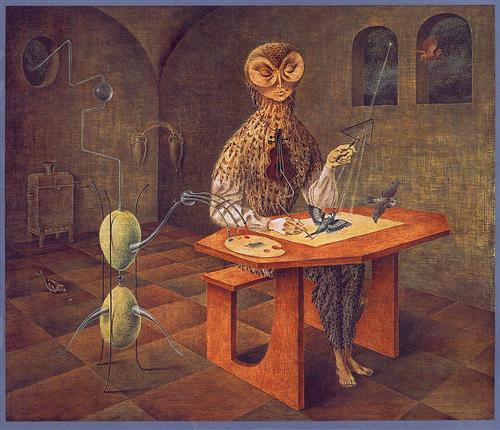
Creaciondelas Aves, Remedios Varo

It was a bit more worldbuilding than I think such a short piece could manage, though, and I walked away after two readings still a bit confused about how Inyanna's disability could be a political liability, and about what a Timor'an might be, in relation to a Qa'ta.  The second time through, when I knew enough to know what I could gloss over and what I should understand, the emotional center of the story packed more of a punch, because I knew what information I was looking for; I understood that Siren and Inyanna were lovers.

What I really want, though, is a bigger bite of this world.  I want to know what the Matriarchy is up against in the political wranglings with the Patriarchy, and I really want to know the results of Siren's research.  I hope and assume that Loenen-Ruiz is working on that for me.

I read my first Tananarive Due novel, My Soul to Keep, for Diversiverse two years ago, and when another blogger, Chrisbookarama, posted about her story "The Lake," I was excited to get a chance to squeeze another dose of her in this week.

A short story is so different from a novel, and when you don't read many of them, it can be surprising how efficiently a good author can present their story.  This one takes full advantage of a viewpoint character who might be just a bit unreliable. She's a teacher who's left her life in Boston for a new job and home and life on a swampy lake in northern Florida. 

At first, some of Abbie's offhand comments might be a little sketchy--high school boys will help her out around the house.  Then we get some hint that perhaps there is something more sinister in her past.  But I think my favorite part is how she reacts when things start getting weird; the character and the setting blend together to form a perfect weird storm.  A quick read; definitely worth it.

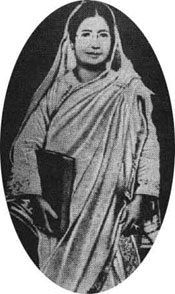
Finally, I read "The Sultana's Dream," by Rokheya Shekhawat Hossein (again, the link goes to the free online story, this time at UPenn Digital Library), another story I found through a Diversiverse post, this one from Based on a True Story.  "The Sultana's Dream" was written in 1905 and was originally published in The Indian Ladies' Magazine, which I think tells you a lot about its intended audience. 

The story reminded me of nothing so much as Charlotte Perkins Gilman's Herland, a novel that is all about demonstrating how well an all-female society would run without men.  The Sultana falls asleep and tells how she was taken by a friend to a country where men are cloistered and women conduct all the trade; there are scientific advancements and no poverty or crime.  It's not a particularly profound story--the idea that all society's ills are caused by men is quite simplistic.  But if you think of it from the point of view of a woman reading it from within the hidden women's part of the house in 1905, you can imagine how strange and promising and freeing even the idea would be.  It's a fascinating historical document.

That's the round up for today!  We're coming to the end of A More Diverse Universe, and my to-read pile has grown faster than I can keep up with it (as usual).  I could use another week to review all the things I've started since this began! 

Sunday, September 21, 2014

Prouder and More Prejudiced

Welcome to A More Diverse Universe! Check out the link for a description of the event and tons of reviews from other bloggers.  Thanks again, Aarti!

 As I wound my way through Aliette de Bodard's On a Red Station, Drifting, and thought about writing a post about it, one of my first thoughts was that it's a shame the title Pride and Prejudice was already taken, because how incredibly perfect would that be for this book.  Of course, then I realized that it was maybe a little too on the nose--or, as one of the characters in this book would have said, the reference is too heavy handed.  I think working the word "Lizzie" into the review would be the correct type of allusion.

Wonderful things have been said about this book by better bloggers than myself, so let me just point out two things that were done better than most books.  This is the story of a space station in the Dai Viet empire during a delicate time--there is a war on, Prosperity Station is packed with refugees, and many of its most prominent citizens/family members have been called away. 

The story is told from two viewpoint characters, which is not that uncommon.  Neither of them is first person, which I think is a strength, but we get very close to both of them and get to know them very well.  The part of this that is remarkable is that these two women are completely at odds with each other, both finding the other to be arrogant and undeservedly proud.

Quyen has been left to manage things, along with the station's AI consciousness, the Honored Ancestress.  She knows that she's not up to the job--not educated enough, not experienced enough, and just barely holding things together, but she's the only one to do the job since all the greater family members have been called away to the war.  Then Linh arrives on the station, a powerful magistrate who left her planet seeking help against the rebels, only to learn that they destroyed everything after she departed.  She has no resources and has lost everything, and is essentially reduced to taking shelter among the distant relatives on Prosper, whom she does not know.

They dislike each other immediately; Linh thinks Quyen is controlling and drunk on her own power, and Quyen thinks Linh is arrogant and used to having  her own way.  The thing is, they're both right, and they're both wrong, and throughout the book, we walk both sides of this line, see both sides of this argument, and come to care about both women as they both suffer and watch helplessly while everything they've worked toward crumbles.

How often, really, are you not on anyone's side in a book?  How often do you like two characters who hate each other where it doesn't turn out to be a misunderstanding, and they finally clear it up by talking it out and then end up allies--or, more commonly, in love?  Not here.  Quyen and Linh are not actually at odds through most of the book, but they never become besties, and I kind of love that.

The other thing I loved was the culture, and how perfectly Bodard built the Dai Viet empire, full of rich cultural nuance, without ever once doing an info dump.  We know that this is an interstellar empire with roots in China, and that there are mindships and stations with minds.  We know that the environments of these spaces are maintained through complicated software.  All standard worldbuilding types of things.

We also understand--not just know, but understand--how the honor of the family is everything, to the point where we feel fear when it's in danger.  We understand the importance of education, the lengths to which people will go to pass rigorous testing, and what is at stake for them. The value of ancestors, whose memories are implanted in their most honored offspring so that they may continue to influence the family.  What it means to be a lesser spouse in a great marriage, and to find your family in theirs.  Education, as demonstrated through poetry and allusions, and the constant dance of honor and status that must be managed perfectly.

That's a lot to load into even a long novella.  Add onto this the feeling of having another presence in your mind--the Honored Ancestress, with whom you can communicate and who is servant, guardian, companion.  The risk of losing that connection, the emotional weight of that.  The stifling pressure of this complicated, familial game, and the risk of trying to leave it.  The absolute horror of knowing that you made what seemed like a reasonable choice, but was the wrong one, and that people you loved have suffered for it. 

I hate how vague I'm being, but I don't want to tell you the story; I want to make you read it.  And the part that I found absolutely amazing here is how much I was made to truly understand in such a short space, and how I was able to really get a glimpse of what it meant to be each of these women--these different, struggling women, who live in a future I can hardly imagine, in a society so different from mind, and who are not only different from each other, but both different from me.  And I get them now.  Aliette de Bodard did that, and I'm in awe. 

Great book; definitely read it.

Thursday, September 18, 2014

Superheroes vs. Gene Luen Yang

Welcome to A More Diverse Universe! Check out the link for a description of the event and tons of reviews from other bloggers.  Thanks again, Aarti!


I say "versus" because it takes Gene Luen Yang to make me read a superhero comic.  And then you get the first 30 pages in and come on, it's barely a superhero comic--this book is entirely about a browbeaten father/son pair and the overbearing, discontented Chinese wife/mother who keeps them oppressed.

I went into The Shadow Hero knowing what the blurb says--in the Golden Age of comics, there was briefly an Asian American superhero called The Green Turtle, and this book is based loosely on him--it's an origin story, of sorts.  That's about it.  But I went in without any doubts, because come on, Gene Luen Yang!  American Born Chinese, Boxers & Saints, The Eternal Smile. Somewhere in the neighborhood where genius meets charming!

But the beginning didn't have the dramatic drive you expect from a superhero origin story--it's not the perfunctory "Peter Parker's Uncle Henry was a great father figure UNTIL....and Spiderman was born."  It's truly this family's small story.

Then.  Then, the mother discovers superheroes (real ones, who fly and rescue people and catch bad guys and exist in this world), and decides that THIS is the man of action she wants her son to be.  She begins to shape him into it--makes him a costume, pushes him into combat lessons, drives him to the site of his good-deed-doing.  And he does his best for her, but it doesn't work out very well.

Then, stuff gets real.  His dabbling in heroism starts a chain of events that ends in tragedy, and all of a sudden it isn't a game anymore.  Peter Parker lets the bad guy get away and Uncle Henry gets killed and Peter has to make up for that, because there's no such thing as making it right.  And I found that the more superheroey it got, the more I liked it.  The second half is much more of an adventure story, and all the personal, emotional real life that went on in the first half pays off.

I loved how Hank gets his powers, and how there are real limitations there, which makes him both very fragile and mortal, and also very special.  I loved the police officer who's trying to do the right thing, in spite of the odds stacked against him.  I loved the gorgeous daughter of the Big Boss bad guy who is attractive and attracted to Hank, but who is not nearly as flat as the bad guy's daughter who loves the hero might be expected to be.

I think my favorite line--I hope I can remember it; wish I'd written it down--is something the detective says after saying something insulting about Chinese people, then realizing that the masked hero he's talking to is Chinese.  He says, "I'm sorry about what I said before.  That's not..."  Hank replies, "That's not who you are," and the detective pauses and then says, "No, that's not true.  But it's not who I want to be."

I loved that.  I loved it so much, because becoming a better person is a process, and it's always a process. Being a hero is the process of acting like one every day--you don't wake up one day with "heroic" as your default setting.  You have to do the hard, right thing, over and over again, every time. Not being racist in a racist world is a process; you have to relearn things you don't even know you learned.  We are all, every day, trying to be the people we want to be.