Tuesday, September 30, 2014

Guilty Pleasure

I cannot decide if the guilt outweighs the pleasure.  But seriously, I almost couldn't stop reading the book long enough to write this, even though I'm pretty much at the end.

Remember I wrote about The Naturals, and how it was like Criminal Minds on the WB?  The sequel, Killer Instinct, is maybe better, pleasure-wise, and possibly a little worse, guilt-wise.  Though I think the guilt is just my realizing how well I can encapsulate a description of this book with the title of police procedurals.

Cassie's mother was a female version of The Mentalist, so Cassie has great cold reading skills.  She's been recruited by the FBI to their Naturals program, which is for teenaged prodigy crime solvers.  Agent Briggs (who in my head is played by Agent Coulson, who in real life is played by Clark Gregg).  She joins the team of Sloane, who is essentially Temperance Brennan on a lot of caffeine, and Lia, whose talents are like the guy in that show Lie to Me, plus Michael, who reads emotions, which I'm not quite sure about--maybe Deanna Troi from Star Trek: The Next Generation?  Anyway, mental casting has him as a young Matt Bomer. The only character who reminds me of a book instead is Dean, whose father was a serial killer (see Dean Koontz's Dark Rivers of the Heart).

Anyway, these kids are picked to live in a house to find out what happens when teenagers stop being polite and start solving crimes.  Their guardian is named Judd and is played in my head by Fred Gwynn.  They are only supposed to work on Cold Cases, but darn it, mysteries just keep finding them.  This time it's personal.

There are the events of the book--the sketchy FBI director's uptight daughter (who has a history with Dean and Briggs) arrives to "evaluate" the program and possibly shut it down; a murder case arises with ties to Dean's father, and the kids, as usual, can't keep their Scooby Gang noses out of the investigation.  The authorities are all "don't you dare even look at this investigation except to answer the pointed questions we ask you and help us whenever we need it, but that's IT!"  And Cassie can't decide if she wants broody Dean or sexy Michael.


I don't know how to describe this book without making it sound like the trashiest book I've ever read.  And it might actually be the trashiest book I ever loved.  But I LOVED it.  I loved it with the part of me that loves Criminal Minds and Bones and The Mentalist, the part of me that doesn't care at all that this is not how murders are solved or how detectives are trained.  The part of me that can't decide if she's on Team Dean or Team Michael, because I love them both!  I love Lia for being bitchy and loyal, and Sloane for being weird.  I love them all, so much.

Sunday, September 28, 2014

Lost in Time

I had made myself a resolution that I'm going to review more books while I'm reading them, because my opinions are much clearer and I have a much easier time keeping my thoughts straight.  But with this one, I don't think I had a choice but to wait for the end; I couldn't figure out if the book was about the journey or the destination.  Having now finished it: journey, I think?

Displaced Persons, by Derek McCulloch and Anthony Peruzzo, is a graphic novel with a timeline running through it--and you need the timeline, and refer to it often, and maybe still can't keep track of what's going on.  Really, it's several stories--a detective hired track down a missing woman in the 1930s; a hippie who's made the wrong enemies and his twin brother the undercover cop in the 1960s; a woman's troubled marriage in the 1990s.  They're told in succession, in different two-tone shades (blue, gray, sepia), and each story is interesting and a neat little episode.  The twins are the detective's grandsons; the wife is the hippie's daughter, so maybe it's a family saga.

But what promises to tie it together is the notion of missing people and found people--people vanish, and people appear.  There's a place in the park, and if you wander through at the right moment, you find yourself in a different time, with no memory of yourself.  At the beginning of the story, a small boy is brought to an orphanage; the detective's mother vanished when he was a boy; etc.  I don't want to give them all away--the disappearances fit together and make their own little parallel story that no one in any of the main narratives knows anything about.

If all this makes it sound confusing--well, I'm sorry to say it kind of was.  I had a bit of trouble telling some of the characters apart, and I couldn't help but wonder if all these stories, these impossibly complicated timelines (there is a timeline that runs between chapters, so you can follow how everyone is related and what happens to them between the events), were going to come together in the end.  I mean, they fit together quite pleasingly, but at the bottom of it, you are reading three different stories, and they're not very closely related.  I kind of expected a generational family saga, but it's only with effort that I'm putting together possible themes and connections, and even these seem tenuous.

I don't want to spoil, but here's an example: you could see a theme in the notion that if you choose a violent, narcissistic man for a mate, maybe it's somewhere buried deep in your family, because way back when that other guy was a pompous narcissist.  But a) none of the intervening generations really lend themselves to that argument, and b) I can't actually remember if you're related to the pompous guy at the beginning, because the relationships are so complicated.

So what we have here are three interesting, well-told stories that did not come together to me in a way that made me understand what the author had to say about what he was showing us.  Which is a shame, because each story had a lot of potential.

Thanks to Netgalley for the free review copy of this book.

Saturday, September 27, 2014

Diversiverse: Let's End with a List

We're wrapping A More Diverse Universe! It's been a great run, and I've found so many cool new books AND new blogs to read. 


It's been so interesting to deliberately look around at my reading world and focus my attention on these authors and this issue.  I've read things I might not have otherwise, gone on a real novella kick (novellas--a low-commitment way to check out a new author!), and thought a lot about the insularity of the book world, and how easy it is to settle down with a self-perpetuating stack of stories and really read the same thing again and again.

So in addition to the books I've already reviewed, there are a few I've started but not had time to finish, and a few more I'm excited about, both ones I just couldn't squeeze in this month and ones that I learned about through this event.  And I love a good list!

Pointe, by Brandy Colbert.  I'm largely drawn to the gorgeous cover, and to ballet books in general after reading Meg Howrey's fabulous The Cranes Dance.  I'd never heard of it, but this review at The Englishist caught my eye, and my library had the ebook just waiting for me!  More than just a ballet story, it's about a girl and a community dealing with the aftermath of trauma, which I always find very interesting.

One Crazy Summer, by Rita Williams-Garcia, was a recommendation from Ana at Things Mean a Lot.   This one's been on my list for a while, but as a middle grades book, it never made it very high up the list.  But Ana's glowing recommendation (including this joint review of the sequel, P.S. Be Eleven at Ladybusiness) has me sold on this story of three sisters spending the summer in California in the 1960s. 

The Story Hour, by Thrity Umrigar, as reviewed by Literary Lindsey. This one had been catching my eye on the library site for a while, though I wasn't sure why.  I read this review and found out it was about the friendship between a depressed woman in an arranged marriage and her therapist, and I'm sold.  I love dramatic depictions of therapy; no idea why.  Yay!

My god, there are so many.  Books I was already going to read: Intisar Khanani's Thorn, Stephanie Kuehn's Charm and Strange, Karen Lord's The Best of All Possible Worlds, Sherri L. Smith's Flygirl.  Books that were just a blip on my radar before this even got me focused: Jacqueline Koyanagi's Ascension, Pam Munoz Ryan's Esperanza Rising, Benjanun Sriduangkaew's Scale-Bright.

What I'm saying is, I'm really excited about the books I read and the ones I learned about, and I'm excited about focusing my reading more to expand my horizons and bring more diverse authors to my shelves.  Thanks so much, Aarti, for such a great event!


Thursday, September 25, 2014

Embrace Your Awkward

Welcome to A More Diverse Universe! Check out the link for a description of the event and tons of reviews from other bloggers.  Thanks again, Aarti!


I love it when reading serendipity happens, like when I'm doing an event like this and Netgalley offers me a copy of Issa Rae's new memoir, The Misadventures of Awkward Black Girl. It's the like the stars are aligned.  And it's double awesome because then it gave me the opportunity to fall down the Issa Rae rabbit hole with episodes of her Awkward Black Girl web series, which is just so on the nose uncomfortable.  Brenda, you have to watch the episode in season one called The Hallway.

This is a memoir of growing up awkward and black, and like a lot of the memoirs that I enjoy, it hinges way more on her ability to tell a good anecdote than on her out-of-the-ordinary life.  Issa Rae moved around a lot growing up, and spent a good deal of time in her father's home country of Senegal, but other than that, her life is a fairly typical American life of her time.
Issa presents this wonderful combination of being very awkward and yet very comfortable with herself.  Or maybe it just seems that way because I'm even more awkward than she is, which is entirely possible.  She went to Stanford, got involved in theater, took some time off to study filmmaking.  She had boyfriends and lots of friends in college.  In high school, her awkward was of a more typical variety--she was the only girl who couldn't dance, and then goofed up by bragging about her dancing skills.  Things like that, the stories we all have, but just told in a way that's hilarious.

There are some interesting things to think about in here; she was on AOL as a preteen, getting into chat rooms way over her head.  She grew up in a golden age of black television, when you could watch The Cosby Show or Family Matters and see a family like yours, and she has a lot to say about the decline in the media presence of the black middle class.  Having then gone out and found her web series, I think I'm going to be watching some more web series--after I finish mainlining all of the Awkward Black Girl content that's out there.  ABG forever!

Tuesday, September 23, 2014

Diverse Shorts

Welcome to A More Diverse Universe! Check out the link for a description of the event and tons of reviews from other bloggers.  Thanks again, Aarti!


Today in the Diversiverse, a round up of short pieces.  Not all these authors are brand new to me, but many are, and they're all stories that I specifically came across thanks to the More Diverse Universe blogging event.

The Song of the Body Cartographer is by Rochita Loenen-Ruiz, who is participating in a round table at The Book Smugglers this week. (The link is to the story, free on the blog Philippine Genre Stories, which is seriously worth checking out.) A girl who is supposed to be able to fly--who should have been born compatible with a symbiotic windbeast--is inexplicably earthbound, and it's the job of Siren, the body cartographer, to figure out why.  The story is very short, and there is a very sweet sadness to it.

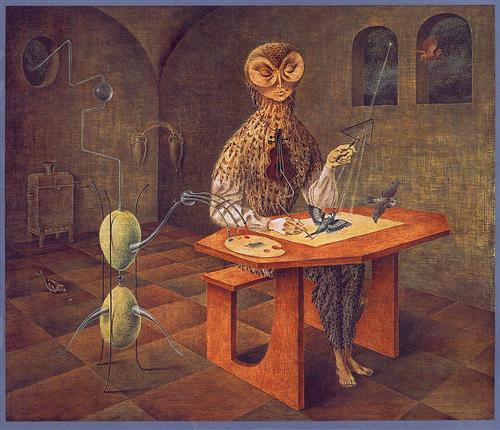
Creaciondelas Aves, Remedios Varo

It was a bit more worldbuilding than I think such a short piece could manage, though, and I walked away after two readings still a bit confused about how Inyanna's disability could be a political liability, and about what a Timor'an might be, in relation to a Qa'ta.  The second time through, when I knew enough to know what I could gloss over and what I should understand, the emotional center of the story packed more of a punch, because I knew what information I was looking for; I understood that Siren and Inyanna were lovers.

What I really want, though, is a bigger bite of this world.  I want to know what the Matriarchy is up against in the political wranglings with the Patriarchy, and I really want to know the results of Siren's research.  I hope and assume that Loenen-Ruiz is working on that for me.

I read my first Tananarive Due novel, My Soul to Keep, for Diversiverse two years ago, and when another blogger, Chrisbookarama, posted about her story "The Lake," I was excited to get a chance to squeeze another dose of her in this week.

A short story is so different from a novel, and when you don't read many of them, it can be surprising how efficiently a good author can present their story.  This one takes full advantage of a viewpoint character who might be just a bit unreliable. She's a teacher who's left her life in Boston for a new job and home and life on a swampy lake in northern Florida. 

At first, some of Abbie's offhand comments might be a little sketchy--high school boys will help her out around the house.  Then we get some hint that perhaps there is something more sinister in her past.  But I think my favorite part is how she reacts when things start getting weird; the character and the setting blend together to form a perfect weird storm.  A quick read; definitely worth it.

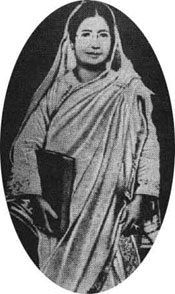
Finally, I read "The Sultana's Dream," by Rokheya Shekhawat Hossein (again, the link goes to the free online story, this time at UPenn Digital Library), another story I found through a Diversiverse post, this one from Based on a True Story.  "The Sultana's Dream" was written in 1905 and was originally published in The Indian Ladies' Magazine, which I think tells you a lot about its intended audience. 

The story reminded me of nothing so much as Charlotte Perkins Gilman's Herland, a novel that is all about demonstrating how well an all-female society would run without men.  The Sultana falls asleep and tells how she was taken by a friend to a country where men are cloistered and women conduct all the trade; there are scientific advancements and no poverty or crime.  It's not a particularly profound story--the idea that all society's ills are caused by men is quite simplistic.  But if you think of it from the point of view of a woman reading it from within the hidden women's part of the house in 1905, you can imagine how strange and promising and freeing even the idea would be.  It's a fascinating historical document.

That's the round up for today!  We're coming to the end of A More Diverse Universe, and my to-read pile has grown faster than I can keep up with it (as usual).  I could use another week to review all the things I've started since this began! 

Sunday, September 21, 2014

Prouder and More Prejudiced

Welcome to A More Diverse Universe! Check out the link for a description of the event and tons of reviews from other bloggers.  Thanks again, Aarti!

 As I wound my way through Aliette de Bodard's On a Red Station, Drifting, and thought about writing a post about it, one of my first thoughts was that it's a shame the title Pride and Prejudice was already taken, because how incredibly perfect would that be for this book.  Of course, then I realized that it was maybe a little too on the nose--or, as one of the characters in this book would have said, the reference is too heavy handed.  I think working the word "Lizzie" into the review would be the correct type of allusion.

Wonderful things have been said about this book by better bloggers than myself, so let me just point out two things that were done better than most books.  This is the story of a space station in the Dai Viet empire during a delicate time--there is a war on, Prosperity Station is packed with refugees, and many of its most prominent citizens/family members have been called away. 

The story is told from two viewpoint characters, which is not that uncommon.  Neither of them is first person, which I think is a strength, but we get very close to both of them and get to know them very well.  The part of this that is remarkable is that these two women are completely at odds with each other, both finding the other to be arrogant and undeservedly proud.

Quyen has been left to manage things, along with the station's AI consciousness, the Honored Ancestress.  She knows that she's not up to the job--not educated enough, not experienced enough, and just barely holding things together, but she's the only one to do the job since all the greater family members have been called away to the war.  Then Linh arrives on the station, a powerful magistrate who left her planet seeking help against the rebels, only to learn that they destroyed everything after she departed.  She has no resources and has lost everything, and is essentially reduced to taking shelter among the distant relatives on Prosper, whom she does not know.

They dislike each other immediately; Linh thinks Quyen is controlling and drunk on her own power, and Quyen thinks Linh is arrogant and used to having  her own way.  The thing is, they're both right, and they're both wrong, and throughout the book, we walk both sides of this line, see both sides of this argument, and come to care about both women as they both suffer and watch helplessly while everything they've worked toward crumbles.

How often, really, are you not on anyone's side in a book?  How often do you like two characters who hate each other where it doesn't turn out to be a misunderstanding, and they finally clear it up by talking it out and then end up allies--or, more commonly, in love?  Not here.  Quyen and Linh are not actually at odds through most of the book, but they never become besties, and I kind of love that.

The other thing I loved was the culture, and how perfectly Bodard built the Dai Viet empire, full of rich cultural nuance, without ever once doing an info dump.  We know that this is an interstellar empire with roots in China, and that there are mindships and stations with minds.  We know that the environments of these spaces are maintained through complicated software.  All standard worldbuilding types of things.

We also understand--not just know, but understand--how the honor of the family is everything, to the point where we feel fear when it's in danger.  We understand the importance of education, the lengths to which people will go to pass rigorous testing, and what is at stake for them. The value of ancestors, whose memories are implanted in their most honored offspring so that they may continue to influence the family.  What it means to be a lesser spouse in a great marriage, and to find your family in theirs.  Education, as demonstrated through poetry and allusions, and the constant dance of honor and status that must be managed perfectly.

That's a lot to load into even a long novella.  Add onto this the feeling of having another presence in your mind--the Honored Ancestress, with whom you can communicate and who is servant, guardian, companion.  The risk of losing that connection, the emotional weight of that.  The stifling pressure of this complicated, familial game, and the risk of trying to leave it.  The absolute horror of knowing that you made what seemed like a reasonable choice, but was the wrong one, and that people you loved have suffered for it. 

I hate how vague I'm being, but I don't want to tell you the story; I want to make you read it.  And the part that I found absolutely amazing here is how much I was made to truly understand in such a short space, and how I was able to really get a glimpse of what it meant to be each of these women--these different, struggling women, who live in a future I can hardly imagine, in a society so different from mind, and who are not only different from each other, but both different from me.  And I get them now.  Aliette de Bodard did that, and I'm in awe. 

Great book; definitely read it.

Thursday, September 18, 2014

Superheroes vs. Gene Luen Yang

Welcome to A More Diverse Universe! Check out the link for a description of the event and tons of reviews from other bloggers.  Thanks again, Aarti!


I say "versus" because it takes Gene Luen Yang to make me read a superhero comic.  And then you get the first 30 pages in and come on, it's barely a superhero comic--this book is entirely about a browbeaten father/son pair and the overbearing, discontented Chinese wife/mother who keeps them oppressed.

I went into The Shadow Hero knowing what the blurb says--in the Golden Age of comics, there was briefly an Asian American superhero called The Green Turtle, and this book is based loosely on him--it's an origin story, of sorts.  That's about it.  But I went in without any doubts, because come on, Gene Luen Yang!  American Born Chinese, Boxers & Saints, The Eternal Smile. Somewhere in the neighborhood where genius meets charming!

But the beginning didn't have the dramatic drive you expect from a superhero origin story--it's not the perfunctory "Peter Parker's Uncle Henry was a great father figure UNTIL....and Spiderman was born."  It's truly this family's small story.

Then.  Then, the mother discovers superheroes (real ones, who fly and rescue people and catch bad guys and exist in this world), and decides that THIS is the man of action she wants her son to be.  She begins to shape him into it--makes him a costume, pushes him into combat lessons, drives him to the site of his good-deed-doing.  And he does his best for her, but it doesn't work out very well.

Then, stuff gets real.  His dabbling in heroism starts a chain of events that ends in tragedy, and all of a sudden it isn't a game anymore.  Peter Parker lets the bad guy get away and Uncle Henry gets killed and Peter has to make up for that, because there's no such thing as making it right.  And I found that the more superheroey it got, the more I liked it.  The second half is much more of an adventure story, and all the personal, emotional real life that went on in the first half pays off.

I loved how Hank gets his powers, and how there are real limitations there, which makes him both very fragile and mortal, and also very special.  I loved the police officer who's trying to do the right thing, in spite of the odds stacked against him.  I loved the gorgeous daughter of the Big Boss bad guy who is attractive and attracted to Hank, but who is not nearly as flat as the bad guy's daughter who loves the hero might be expected to be.

I think my favorite line--I hope I can remember it; wish I'd written it down--is something the detective says after saying something insulting about Chinese people, then realizing that the masked hero he's talking to is Chinese.  He says, "I'm sorry about what I said before.  That's not..."  Hank replies, "That's not who you are," and the detective pauses and then says, "No, that's not true.  But it's not who I want to be."

I loved that.  I loved it so much, because becoming a better person is a process, and it's always a process. Being a hero is the process of acting like one every day--you don't wake up one day with "heroic" as your default setting.  You have to do the hard, right thing, over and over again, every time. Not being racist in a racist world is a process; you have to relearn things you don't even know you learned.  We are all, every day, trying to be the people we want to be.

Tuesday, September 16, 2014

Not Your Momma's Teenaged Vampire

Welcome to A More Diverse Universe! Check out the link for a description of the event and tons of reviews from other bloggers.  Thanks again, Aarti!


One of my goals for Diversiverse this year was to discover new-to-me authors.  Zen Cho's name came up when she was on a panel with somebody that I saw in someone's blog post--I'm sorry, I don't even remember who, I just saw a photo of the author doing something silly and knew she wrote speculative fiction and thought, "hey, I should check her out."

So I found her novella, The House of Aunts. (That link, by the way, is NOT to Amazon, but to a site called GigaNotoSaurus, where you can download the story for free.  The site publishes novellas, and it's an exciting discovery in and of itself!)  After a little bewilderment wading in, I was absolutely charmed by the story of Ah Lee and her crush on Ridzual, a boy in her class.  Her feelings hit her suddenly, and she's overwhelmed by a shy kind of fascination.  But she lives with her many aunts, who insist that she must concentrate on school, get a good education, and maybe someday later she can think about boys.  The aunts' haranguing, the stories you learn of their lives, and Ah Lee's growing friendship with Ridzual are the three components that make up this mostly domestic, family/romance story.

Except the aunts are vampires, and so is Ah Lee. Nothing so melodramatic as your nocturnal bloodsuckers, they are both more prosaic and, we learn in hints, more frightening than that.  They eat human entrails, though the aunts insist on cooking them, because we are not animals.

But mostly, the aunts pester Ah Lee about her education, and about not getting involved with a boy, and about not getting involved with this boy, and about anything they can pester her about.  And Ah Lee gets to know Ridzual, becomes friends with him, and maintains her poise in spite of herself.

Finally, though, her feelings and her undead state get tangled together, confusing, and everything comes to a head, and I won't tell you how it turns out because spoilers!  But it's good reading, I'll tell you that.

There were things about this novella that confused me; I think the main one was the dialogue.  I'm pretty sure this takes place in Malaysia, but on and off, some of the characters would speak as though there was a language barrier.  I finally realized this pretty much only happens at school and never at home, so it's either a slang thing, or else there is an actual language barrier, and the language Ah Lee speaks at school is different from the one she speaks at home.  I found it quite distracting at first, though, because it reads like pidgin English, which distracts you from the fact that they're not actually speaking English at all.

Another thing that I wasn't sure of at first was the aunts. At the beginning, they are somewhat tedious--there are so many of them!  And they nag so much!  As you go further, though, and you begin to tell them apart, you see snippets of their previous lives; you begin to tell them apart and see their distinct personalities; you see Ah Lee's personal relationship with them as people, and their fierce love for each other.  And you begin to realize that it's a fairly typical adolescent thing, isn't it?  The adults are sometimes a faceless mass telling you what to do, and sometimes individual people who offer you amazing love and patience and whom you love fiercely.

It just came together, is how I would describe this.  And the vampire part added a lot more personal drama than it did horror--though the glimpses of horror, seen kind of around the edges of the story, make me think there's another, much scarier tale you could tell.  I'd be interested to read that, too--in addition to other stories by Zen Cho.

Sunday, September 14, 2014

The Girl from the Well

Welcome to A More Diverse Universe!  I'll begin the two-week event with a book I read courtesy of a NetGalley ARC.


I got this book, The Girl from the Well, by Lin Chupeco, from Netgalley, mostly because my best friend is super into Japanese horror movies.  Horror novels are a completely different beast from movies--tension is built differently, images have to be used differently--and I've never quite gotten the hang of them.  I think I'm just a jaded cynic.

I suppose it's not the most innovative thing, to tell the story from the point of view of the ghost.  But what I would usually expect from a book like that is a ghost who is really your average person, only, you know, dead.  Incorporeal.  Living in the afterlife.  This is something different, though, about this ghost--straight out of a real legend, straight out of the well, straight out of The Ring.

The narrator is Okiku, the ghost of a girl who was murdered 300 years ago in Japan.  She is based on real Japanese legends, and in this story, as in those, she is a vengeful spirit who horribly murders those who remind her of her killer.  In this case, it is people who harm children; she follows those people, drifts into their lives, and enacts horrific retribution--they are found, nowhere near water, looking days-drowned.  In this way, she also frees the spirits of the children who are bound to them.

Then she meets a boy, Tark, whose tattoos surge with power and whose personality bristles.  He carries a shadow--another ghost, but he doesn't understand it.  Tark and his cousin Callie find the world more complicated and creepy than they'd thought.

Okiku is far and away the best part of the book--although she narrates the whole thing, there are parts that are clearly told with her "voice" and point of view, and there are parts where she narrates Tark and Callie's lives, where her voice has more distance.  Those parts are fine, but the touch of her foreignness, her otherness, is really excellent.

Callie is in many ways the protagonist of the novel--she's the one who figures out that something unnatural is going on and investigates.  Her love for her cousin and her general good-personness drive the plot and hold the bits of the narrative--Okiku's distance and rage, Tark's father's confusion, and the possibility of resolving his haunting--together.

I think the biggest weakness here is the dialogue, which is pretty stilted; all the characters sound the same.  The best part is our antihero, our murdering, horrifying, rising-from-the-bathtub-in-her-unholy-glory ghost.  It's the world through a completely different set of eyes, and it's what sets this apart from another creepy story.  Thumbs up, I think.  Very much up.

Thursday, September 11, 2014

Little More Wrap Up

Whoopsie doodle--I've been doing so much reading I feel like I've dropped off on my blogging.  The worst part is the feeling that there were books I wanted to review but let slide away before I remembered to.  That's incredibly depressing to me, for reasons I'm not quite sure of.

Also, more vaguely, I feel like I'm a better blogger when I write while I'm reading instead of after.  My straight-up reviews always feel forced, and I'm terrible at summaries.  I need to start writing while reading more.  Note to self taken.

Okay, here's what Goodreads cut me off from yesterday--two more mini-reviews before we swing into the Diversiverse!

The Naturals, by Jennifer Lynn Barnes.  This one is perfect for a mini-review, because there's not a lot to say; it's about the unlikely scenario of a teenaged girl being invited to participate in an FBI pilot program in which particularly perceptive young people are trained up to be profilers.  This was the exact equivalent of a very special episode of Criminal Minds starring the cast of Beverly Hills, 90210.  It was that profound, edgy, and literary, but on the plus side, it was that watchable--sorry, I mean readable. 

(Aside: Criminal Minds is replacing Jeanne Tripplehorn with Jennifer Love Hewitt.  I think this might be the end of the affair, especially if J Love wears her eyelashes and her backup eyelashes on the first day.)

Where was I?  Oh, yes, Cassie was raised by her stage-psychic mom until she disappeared in a big puddle of blood and was presumed murdered.  Now, at 17, she works for the FBI with some other perceptive wunderkindz, learning to profile.  Only cold cases, though, or else it would be unethical or something, except then THE CRIME COMES TO THEM and NOW ITS PERSONAL and also there are two cute boys who are both hot for her.  Yeah, it was YA, but there was profiling and I read it like lightening.  And I already have the ARC of the sequel, so expect more!

Locke & Key.  I finished it.  Joe Hill, Gabriel Rodriguez.  Holy crap.  I can't believe I haven't posted about this yet.  The last volume is called Alpha & Omega, and it's nuts and scary and oh, so satisfying. 

Okay, I haven't written anything, and I don't know how to talk about the whole thing.  Basically, the Locke family moves back to the ancestral homestead after their father, Randall Locke, was killed by one of his students (guidance counselor).  Mom's drinking too much; Ty, a senior in high school, blames himself for his father's death; Kinsey, a few years younger, can't stop crying; Bode is only seven but has gone strange and quiet.  They're hoping that starting over in the town where their dad grew up but they've never been will help, somehow.

When they move into the big old house called Keyhouse, strange things start to happen, and the kids realize that the house comes with a set of keys with magic powers.  They experiment and change their lives a little with them, make new friends and try to move on a bit.  But something wants the power and will stop at nothing to get it.  (Cliche much?  I told you I can't do summaries.)

Anyway, the book is really an amazing account of grieving--Kinsey wants to stop crying and when she uses the head key--you can open up your head and take out a memory or thought or feeling--to remove her fear and weeping, she appears stronger, ready to take on anything.  But this leads her to make some risky choices and hurt some of her friends.  Bode likes to use the death key, which lets you drift around as a spirit (while your body lies there dead) and then return to your body later.  The cycles each person goes through of strength and weakness, of starting to get a handle on their grief and then being overwhelmed again, are really powerful.

For the first few volumes, I found the most frustrating thing to be that we were following most of the story from the point of view of the bad guy, who the kids don't even know exists.  I mean, they have no idea that there's anyone out to hurt them, any bigger agenda, any larger playing field.  Watching him manipulate them when not only do they not know he's the enemy, they don't even know there is an enemy, was one of the most effective and frustrating uses of dramatic irony I've read.

This was a tight story that fit together perfectly--the historical material (from the Revolution, and from Randall's childhood) added enormously to the modern story, both with information and with emotional tension. There's no extra, and everything builds toward the climax.

As for the ending, it did everything I needed it to.  There was a lot of loss, and a lot of death, but at the very end, we're given back just enough to boost us up.  And seriously, the Touching Parental Moment is not my favorite trope, but damn if this one didn't make me cry.

Highly, highly recommend.

Tuesday, September 09, 2014

Clean Sweep: Mini-Review Edition

So many books.  Can't keep up.  Reading intensely for A More Diverse Universe.  Behind on blogging.  Round up post!

Rapture Practice, by Aaron Hartzler, is subtitled A True Story about Growing up Gay in an Evangelical Family, which to some extent wraps it all up, and to another extent is misleading.  Aaron Hartzler is definitely gay, and he definitely grew up in an evangelical family, but that's not really the focus of the book.  It's more about growing up as a normal, open-minded person in an evangelical family.  At the end of the book, Aaron is graduating from high school, and he's only begun to admit to himself that the idea of "gay" might have something to do with him.

Most of the book is about being someone who loves the arts--movies, plays, and acting; singing, playing, and listening to music--and is held back at every turn. His parents instill him with a love of music, and prevent him from playing anything but conservative Christian music (Christian rock is unacceptable, as are more traditional songs by artists who also perform Christian rock).  He is pulled from his Christian high school to go to a more Christian Christian school, where the cheerleaders can't show their knees. Aaron finds space to be himself--he sneaks to movies, buys Wilson Phillips and Amy Grant tapes, drinks at the house of a friend whose piety he has described to his parents in perhaps inaccurate terms.

This book was so much better than I expect from your typical growing up Christian memoir, especially since it doesn't really break the mold in any specific way.  It's really an account of his family life, his friends and school, and how his thought process worked as he began to recognize the edges of the small world he was raised in.  But his assessments of everything are so clear-eyed, and his generosity toward everyone, even when they're wrong and damaging, is really remarkable.  He loves his parents, but even more than that, he sees them truly--sees their fear for him, their true faith, and their own love for him.  His descriptions of all his relationships with his peers are also perfect--he describes dating girls and friendships with boys, but the attention and care and emotional intimacy in his male relationships is noticeable long before the idea that he might be gay arises explicitly in the story.  If you like this type of memoir, this one is absolutely worth reading.

Emily Carroll's Through the Woods is a set of stories, a comic, really, but something simpler and infinitely creepier.  It's like Charles Addams and Edward Gorey and H.P. Lovecraft got together to work on the haunted house this Halloween.  That was the most scared I've been from a book in my memory since reading Stephen King at 14 years old.  Each story is small, each one builds, and most of them are just...eerie. 

I don't know if I can explain it.  But I found her website, which has a bunch of her other stories, and they pretty much capture the feeling perfectly--that place where unsettling turns to horrifying.  Delightful and gruesome.  I think my favorite might be "His Face All Red," which is also on her site.  At the very beginning--"that man is not my brother"--chills.  Very highly recommended.

....And now Goodreads is crashing on me and it's past my bedtime and I can't remember any of the other books I've read lately.  Godspeed and more posts Friday.

Sunday, September 07, 2014

In Which I Participate: Diversiverse!

The fabulous Aarti is hosting A More Diverse Universe again this year, and I'm incredibly excited.  My to-read list is overflowing with good stuff that fits the criteria here--any book written by a person of color--and I have plenty of books that I've been itching to read, but that just never make it to the top of the pile.  So, I'm totally planning to overshoot here, and seriously even challenge the hell out of myself. 

Two full weeks of Diversiverse posts.  I'm going to stick to my (recent, consistent, and fingers-crossed) MWF posting schedule, and I'll have six posts during that two weeks.  I'm pretty psyched about this.

Now, I will admit that I do not expect to read all of those books in two weeks.  I am too slow, and there will be a book club meeting in that period.  But I have a couple of queued up reviews for books I've read recently, including some comics and novellas, and I'm reading an Aliette de Bodard novel right now.  I will definitely read at least one book that fits the criteria during the actual week.

I think the exciting part is that I've already started finding new authors because I'm going out proactively looking for this kind of work.  It's great that I'm digging people out of the TBR list who were already there and bringing their books up to the (teetering near the moon) top of the pile.  But to me, a lot of this is about finding new books I wouldn't have found, because their authors didn't cross my path or catch my eye.  I've already found one great new novella because I went exploring for this event, and I've added several comics I didn't know existed.

So, starting next Monday, two weeks in the Diversiverse!  I'll have a list and a schedule and everything.  Make sure to head over to Aarti's blog and check out all the activity for the event, including some cool suggestion lists she's already put together.  Welcome to a wider world, everyone!

Wednesday, September 03, 2014

Tolkeinier and Tolkeinier

I'm so incredibly closing in on the end of LOTR.  But here's the thing--I've hit about the 3/5 point in the last book--section 29 of 49--and they've defeated Sauron (sorry, retroactive spoiler there) and Aragorn has been crowned king, and Faramir and Aeowyn (audiobook; I can't spell these things) have found each other, and it's like, what's left?  What is the last 10 hours of this book going to sound like?

Because so far, it sounds like "and clad he was in mail of ebon, his tunic girded by a belt of shining gold. And far from the plains of Burlthonwig and Lurdsonveil there came joyful masses singing of the glories of the latter days of Middle Earth, and throughout Berithdwall and Emmeline there was much rejoicing."  And seriously, I believe this could go on for ten more hours and I heartily, heartily hope that will not be the case.

Seriously, JRR.  Pacing.

Tuesday, September 02, 2014

Asterios Polyp, Snob

For the first time in my four years at my job, I have coworkers whose taste in books overlaps with mine.  I have not jumped on them too aggressively (what are you reading? you should read this! what do you like???), but deep down I am full of squee and I made Lily read Lexicon, which went well.

Even better, Kelly's into comics!  The other day she handed me a copy of David Mazzucchelli's  Asterios Polyp and said, "this completely blew my mind, you have to read it." This is the kind of statement that cannot be argued with, and it is my experience that someone who shows up with a book recommendation that includes the book in hand is Serious and should be taken Seriously.

Which is why, when I started Asterios Polyp and found the main character to be horrible and off-putting, I didn't give it up.  I might have, otherwise, because snobby academic is not my kind of protagonist--postmodernism and architectural or linguistic deconstruction and the seriously David-Foster-Wallacian notion of an architect who has won awards and is highly regarded in spite of never having had a building built and I'm somewhere between wincing and queasy.

So yes, Asterios Polyp is an architect.  He's an academic.  He's tailored and polished and smokes; he likes to hear himself talk and his nose is perpetually, literally, in the air.  He is enough of a jerk that I hated him, but also enough of a realistic, understandable character that I know I'm not supposed to hate him.  Which means I'm not sure I want to read this book, if it's going to treat this guy like someone I should admire.

Thank you, Kelly, for pushing it into my hands, because I probably wouldn't have kept reading otherwise, and holy crap, this is MIND BLOWINGLY GOOD.  It's about a very smart person who is not a very good person, so there's all kinds of very smart stuff--like, complicated intellectual stuff--that's just lying there casually on the page, not as the point of the book, but as background for how smart this character is as we read a book whose point is that all this brilliance isn't quite enough.


The narrator is Asterios's stillborn twin brother--another version of him, one who didn't live his life, but watched it, and the story's structure is around Asterios walking away from his life when his apartment burns down.  We follow the present, where Asterios travels as far as he can with the money in his pocket and takes up a working man's life, and we follow the past, where he meets his (now absent) wife, and spends his time surrounded by and judging brilliant people.

I don't know how to explain this to you.  It's not about looking down on intellectualism, or even snobbery.  It's about how snobbery is actually vulnerability, but that's impossible to see from the outside, and sometimes even from the inside.  It's about how connections can make us better people, and how the world around us affect us whether we like it or not, and it can be beautiful if we can find it in our hearts to embrace it.

Hana, Asterios's wife, is the lynchpin of the story, of the past and the future.  She's his opposite, and when they meet, they are drawn in different styles.  As they come closer, their styles blend, but in moment of discord they separate again.


This technique is used throughout the book--characters have distinctive colors, illustration styles, and fonts for their speech.  They come together and move apart as they know each other and become aware of the inevitable gaps between them.

As for the ending...I'm not sure what I think.  It's both right and startling, and because of that, maybe inevitable?

Seriously, if you are interested in comics and how they can be literary fiction, you absolutely have to read this book.  It's seriously breathtaking.

Thursday, August 28, 2014

Swinging at Shadows

Shadowboxer, by Trish Sullivan: yet another highly anticipated (by me) ARC from Netgalley!  I've been on a roll lately--possibly because I've been practicing at least a little restraint and requesting books I'm really, really interested in reading, rather than anything that looks good and I can see myself maybe being into.

Check out that cover (and if you're interested, check out the Booksmugglers post about the cover)--you've got your gifted Latina girl from New Jersey who can fight like a demon, and the forests of Thailand behind her, where she goes to train when her uncontrolled temper gets her in too much trouble at home.  There's magic here, and mystical happening, and a whole other character besides Jade to follow.  But Jade is the heart of the book, and her fight career feels almost as important as the life and death (and beyond) problems that are facing our characters here.

The mystical part of the story revolves around the Forest, which is a mystical place between worlds that some children have the power to visit.  Adults can travel there, too, with the help of certain drugs and these children, and one man named Mr. Richard uses his knowledge of the Forest--and a little girl named Mya--to develop new drugs and deliver illicit packages around the world.  Mya has been in his care for a year, but she's starting to realize that she may not be safe with Mr. Richard--and others may be in danger, too.

Now, a description of the plot would be too confusing, but I find that true of almost every plot description.  The best part of this book by far is Jade, who is tough and insecure, a great fighter with impulse control problems that keep getting her disqualified, a loving, supportive family and a fondness for cats.  When she punches someone she shouldn't, her manager sends her to train with his brother in Thailand, and when she comes back, trouble seems to have tagged along.

The weakest part of this book by far was getting all the pieces in place--Jade crosses someone she shouldn't, but a lot of the things that happen only seem to happen to her because she was in the wrong place at the wrong time.  Really, for the first half of the book, Jade is living the life of a Jersey fighter while the real problems happen to Mya.  But when they all come together--once everyone is in it up to their eyeballs--everything starts rolling fast and they completely had me.

Jade was my favorite part of the book, though.  I loved her warm relationship with her cousin; I loved her ongoing determination to get better at keeping her temper (which was ROCK SOLID except during the 30 seconds when it would have been useful); I loved her relationships with the other fighters, both in her gym, at the school in Thailand, and those she meets in the ring.  I loved how this book was full of people not just of different races but of different cultures, from around the world, and that is absolutely just a matter of course.

And I learned a lot more than I ever thought I'd know about Muay Thai and Mixed Martial Arts.  And you know, I never though I'd be at all interested, but they are handled so perfectly, with just the right amount of actual information and Jade's reactions to things that she understands and I don't, that there's some really fun competence action going on here.  I ended up surfing the web for videos of the dance you have to do before a Muay Thai match.  It's pretty awesome, and I definitely found that part of the book way more interesting than I would ever have expected.

I do think my only wish is that Jade and the main plot--Mr. Richard, the investigative reporter, Mya--had come together a little earlier in the story, and that the supernatural parts that were about gods had been blended a bit better with those that seemed more straight out magic-is-natural.

But these are clearheaded observations made quite a few days after I finished the book.  While I was in it--well, I read it all through vacation, never put it down.  (Though I will admit that I had Fiona Apple running through my head the whole time!)

Tuesday, August 26, 2014

PTSD, Horror Movie Style

The internet has been telling me to read Daniel Gregory.  Possibly the internet primarily consists of Jenny at Reading the End, but I don't keep track of how things end up on my to-read list, so we can just assume that the internet is to blame.  On Wednesday I read her review of We Are All Completely Fine and immediately requested a copy fro Netgalley.  They sent it, I started reading it, and I read it in one big gulp last night.  She was right; I should be reading this guy.


I think I was turned off because his books are hard to blurb--a combination between complex world-building that doesn't read well in succinct, back-cover layout, and somewhat grim, grotesque images that seem offputting without the context of a gripping story.  Check the blurb for The Devil's Alphabet; long, confusing, and not actually that appealing.

But we all know what a good author can do with a complicated story. 
We Are All Complete Fine is a novella, and its simplicity belies all that's going on here.  First, the premise is so intuitive that I wish there were more stories like it; this is a support group for people with...unusual histories.  Really, it's made up of five people who have survived, essentially, horror movies.  I won't give them away, because the unfolding stories are half of the book, but the point is, if you are that one person who survives to the end of The Ring or The Hills Have Eyes or whatever horror movie I haven't seen but seriously, how do you go on?

There's always this point made at the beginning of a movie like that of how normal life is, how this person is Just Like You, living in a world where Weird Things don't happen, and then suddenly reality changes for them and they are in a horror movie.  There would be some emotional fallout there, right?  This is what I always liked about The Hunger Games, that there's no pretense that you come out of that just tougher, stronger, more cynical.  You also come out confused, and broken, and miserable.

So we have a therapy group.  And I mean "we" literally, because each chapter is framed in the first person plural, then zooms into the third person singular to follow a character.  This was a weakness, only because the group goes from "we" to "they" and back to "we" in each chapter, which is just weak.  I know first person plural is tough to pull off, but if you're going to do it, commit to it.

That's my only complaint.  It's complicated, rich, creepy as all get out.  It's about survivor guilt, but also about how much responsibility we should actually accept for what we suspect or know about, about how small, casual choices can have big repercussions, and how no bystander is completely innocent.

And now I ran out to the library and have more Daryl Gregory on my stack.  Because Jenny was right and I should really be reading him.

(Thank you to NetGalley for my review copy of this book.)

Sunday, August 24, 2014

The End of the Bees

It's always sad when I put down a book I was really excited to read.  Laline Paull's The Bees got a lot of buzz (oh, that wasn't going to be a pun, but look, there it is!) earlier this year because of some NPR coverage.  It promised to be odd and charming and informative.


Well, I definitely found it odd, and it's pretty informative.  Unfortunately, I'm not charmed enough to finish it--which I'm pretty sure puts me in the minority.  I'm finding it a slog, actually, and I'm putting it down about 1/3 of the way through.

This is the story of Flora 717, and it begins with her birth, when she hatches from her honeycomb cell to begin her life as a sanitation worker in the hive, for the love and benefit of the goddess/queen/Holy Mother.  She is plucked from obscurity by a Sage sister (categories of bees are identified by their "kin," with plant names, and individuals with numbers) and taken to the nursery--an experiment, to see if a sanitary worker can be taught to feed the larvae.

Through the following days, Flora moves from area to area, changing jobs and learning new things in a world where life is strictly regimented, where nonconformity is policed and treated with the Kindness (execution), and hierarchy is clear, firm and biological.

Except it isn't.  And I think this is my problem: in order to anthropomorphize something as alien as bee society, you need to layer on all these features of independent mind and free will that are--for a human audience--human traits.  So, from this human point of view, bee society is horribly repressive and messed up.

Except, it's not, because they're not human--they're bees.  Being a human in bee society, even outside the obvious issues of size and wings and trivia like that, would stink.  Life would be nasty, brutish, and short.

What I think she was trying to do is what a science fiction author would do with an alien culture, which is to use it as a lens for us to look at humanity, so we can step outside of the familiar and see things from a new angle.  Which is great, but the reason that works is because the SF author gets to make things up.  This book is more like an extended analogy, and because nature limits what you have to work with, it doesn't seem to work very well for me.  But then, I've been pretty frustrated with Oppressive Societies Are Oppressive fiction lately.

On the subject of bees, though, let me give you a positive recommendation: Clan Apis, by Jay Hosler.  This is comic book with essentially the same objective as The Bees--to dramatize the life cycle of the bee and to teach us something about humanity at the same time--and I believe it was much more successful. 

First of all, it's funny--it a broad, kid-directed way, but funny.  It's quite direct about its educational sections--at various points, a young bee gets lectured about the life cycle by older characters.  It's a comic for kids (in spite of a little bee sex and plenty of death), but I found it absolutely charming and heartwarming, and I cried a couple of times when I was reading it.  I recommend this one highly.

One thing I will say about The Bees--it's left me seriously wanting to reread Watership Down to figure out how Richard Adams made that whole "real facts of nature and anthropomorphic drama convincingly wrapped together" thing work.  That book was amazing.  I think it has to do with the characters, but I haven't quite figured it out yet.  I'll let you know if I do. 

Thursday, August 21, 2014

Verity Revisited


This month, book club read Code Name Verity, by Elizabeth Wein.  I read and loved this quite a while ago, and I was excited to get a chance to talk about it.  My fellow clubbers were not as excited about it as I was, though they mostly liked it.  It definitely ended up on that list of books that weren't bad, but didn't give us a lot of conversational fodder.

Which also means this reader's guide will be pretty short.  They're some of the things that I was thinking about on this read-through, along with points that were made at book club.  It's funny how I am never surprised or thrown off when someone else doesn't have the same feelings or opinion about a book as I do, but I am surprised when they have different perceptions or expectations. 


1) This book has been much reviewed and discussed in the blogosphere, and it's generally known to have a "twist" in the middle.  Did you see the twist coming?  Do you even think it was a twist, or was it more of a reveal?  What's the difference?

2) What expectations did you have going into the book? The cover blurb tells you that two women crash in occupied France--this small amount of information removes some tension that would exist if you were reading blind (which I did the first time; I had an ebook with no cover blurb).  Between cover information and other background knowledge, how was your perception of the book affected by what you knew before going in?

3) Related, what do you think of this cover?  This was the cover when I first read it, though I don't think it's current now.  The cover led some of my fellow clubbers to expect the story to take a romantic turn, possibly even a sexual one. 

4) Springing from that, what do you think about Julie and Maddie's friendship?  "It's like falling in love, finding your best friend."  Julie says they would never have been friends if not for the war; even if they had, do you think this type and intensity of friendship is ever replicated outside of wartime? 

5) Do you think Maddie and Jamie end up together?  (There's info on that in Wein's companion book, Rose Under Fire, so I know the answer, but it was a discussion at book club.)

6) This is one I've thought about a lot, and it applies to a lot of books.  When you have a book where the narrator's reason for telling the story is part of the narrative--basically a story that is being written by one of the characters, as opposed to just "told"--there's a certain stylistic bar that needs to be cleared.  This is true in epistolary novels, books that are structured as diaries, and book like this, where the narrator sitting down and writing the account is part of the account.  The fact of voice is a huge deal in a book like that, because real letters and diary entries don't sound like novels, and very few people actually writing their life story are going to sound like they're writing a novel.

The way I see it, there are two problems faced by a writer working like this.  First, providing information to the reader of the novel in a way that is narratively pleasing while remaining authentic to the in-story writer's intent.  Like, when I sit down to write in my diary about the day Something Big happened, I probably don't start with all the details of how it was an ordinary day and I ate breakfast, etc.  Honestly, in my diary I start with the BIG point and then maybe backtrack to details, but there's no tension in a diary entry, because I'm writing for someone (me) who already knows the end of the story.  Similarly, if I write a friend to tell them Something Big happened, I make an announcement.  I'm not likely to draw it out with a detailed account that leads up to it.  Maybe some people do, but I don't.  So it's on the author to come with a voice that seems to be someone who would authentically write like that.

The second problem is related--backstory.  Someone writing in their diary is not going to describe the fight they had with X today while giving details of the history of their friendship with X, and info about X's parents and history and all the info that the reader needs.  Some of that info might come up peripherally (I mean, I know her mom is critical, but that doesn't mean blah blah blah), but you're not going to find a way to get an incident from years ago that informs this one into the document.

Verity solves that by making Julie a) a very literary writer, who b) is purposefully rambling.  There are in-story explanations for why she wants to give so much detail and history and go over every bit--self-comfort, stretching the time out, and other, below-the-surface reasons.  Maddie, on the other hand, is a blunter, more practical person, and while her writing because she has literally nothing else to do makes some sense, I think the image slips more here.  Wein does a good job using a different voice, but she does get into narrative parts and it starts to sound like a novel, and not like what Maddie would write. 

And heaven help us, one of my pet peeve lines in literature is "I have to write this down or I'll go crazy" or forget, or it won't seem real.  If you have to tell me that, it's because you know I'm not quite buying it.

So to summarize the question: how does the semi-epistolary nature of the novel work for you?

It's really my one critique--I don't mean to sound like I hold it against the book.  I love the book, and I love how Maddie's cold hard facts reveal so much about the truths behind Julie's narrative.  Really, though, I just love Maddie and Julie, and that they have each other and love each other.  I've read a million World War II books, and I think this one might have touched me the most.

Tuesday, August 19, 2014

Wackademic

There is something about rarefied atmospheres that appeal to me.  It's what I love about books set in convents and boarding schools, and occasionally I find myself drawn to a book set in the Ivory Tower.  I enjoyed Allegra Goodman's Intuition (though I agree with Kris's criticism that the science is not good science); I was very bothered by Francine Prose's Blue Angel.

When I read a blurb for Dear Committee Members, by Julie Schumacher, two things caught my eye: epistolary novel, and "droll and inventive."  A comic novel is hit or miss, and a comic novel that sounds like it might have an axe to grind--a beleaguered academic writing reluctant letters of reference promises to be thinly veiled whining from someone in a similar position--sounds just awful.  But...but.  I don't know what the "but" is--"but" I requested it from NetGalley anyway,

I needn't have worried--it is NOT about whining.  I mean, the character whines a lot, but he's genuinely hilarious.  I did get annoyed with him when he went off-topic--I completely understood why so many people couldn't stand him--but I also found it kind of charming when he wrote way-too-honest letters:

"This letter recommends Melanie deRueda for admission to the law school on the well-heeled side of campus.  I've known Ms. deRueda for eleven minutes, ten of which were spent in a fruitless attempt to explain to her that I write letters of recommendation only for students who have signed up for and completed one of my classes.  This young woman is certainly tenacious, if that's what you're looking for.  A transfer student, she appears to be suffering under the delusion that a recommendation from any random faculty member within our august institution will be the key to her application's success."

This would get old, but it's just the framework and the vehicle for telling the story--the story of his life, and the story of this school year.  He writes to his department head and the dean, complaining about cuts to the English and Creative Writing departments.  He writes to his exes and old classmates, who work at other institutions, in other parts of his university, or in business.  He recommends students and tries to find a position for his protege. He soothes exes, complains about the state of academia, and worries about old friends.

And over the course of this, we get a clearer picture of him--his early literary success, his conflicts with his exes, his reputation as a crank in the department.  It's not just a character sketch, though--you can watch the relationships work out in this one sided correspondence.

I also learned more words in this book than I ever have.  My Kindle is earning its props for instant definitions; I've highlighted mephitic, senescence, strabismic, ding an sich, and yclempt, and that's just in the last quarter of the book when I started highlighting.

If this review does not adequately convey that I found the book amusing, whimsical, and touching, then it's because I'm still kind of jet lagged.  Sometimes it's the books you really like that you have a hard time explaining.

(Received a free copy from NetGalley for an honest review.)