Tuesday, August 29, 2017

Quick Takes: What Is Possible?

It's a summer of impulse books from the YA display!

The Possible, by Tara Altebrando, is about a teenager whose life is being featured on a podcast that is kind of like Serial.  "The Possible" is the name of the podcast, and the teenager, Kaylee, is the biological daughter of a convicted murderer.

Mostly this doesn't affect Kaylee's life.  She lives with her adoptive parents and has pretty much a normal life.  She knows that her biological mother is in prison for killing her baby brother--she testified at the trial as a small child--but it's an old memory that she hasn't thought about in years until the reporter shows up.

Her adoptive parents are against her getting involved, but Kaylee starts looking into the rest of the story, the parts that her childhood memories have nothing to do with. She learns that her birth mother Crystal had been a notorious teen psychic when she was young.  It had been a national sensation, people trying to prove or disprove her powers. As Kaylee tries to sort through who her mother was, she decides to get work with the podcast creator to try to figure out the past.

This one kept me turning the pages--I appear to be all in for YA these days.  Kaylee tends to get what she wants, and she's kind of a brat as a result. And maybe, just maybe, she has some powers of her own.  But her investigation into Crystal's past keeps her life turning in circles around her, and my loyalties changed every few pages throughout the book. 

The most interesting part of the story, though, was how it traced what it's like to be a feature of a story like this.  She cooperates with the reporter, but she only knows her part of the story, and as she listens to the radio show each week (like Serial, the reporting happens in real time between episodes), the story ends up much bigger than she expects, and she's not always on the same side as the storytellers. 

Watching the narrative of Kaylee's life unfold with so little control for her is the best part of the book.  It actually reminded me in some ways of Rocks Fall, Everyone Dies, in that the main character is a self-centered jerk who you still root for, and you're grateful as they develop some self-awareness over the course of the novel.

There's a final "showdown" that is so silly as to be unbelievable, but it's darned cathartic so I'll let it slide.  This book is definitely for YA readers; the growing up that happens here is real and pretty touching.

Sunday, August 27, 2017

Quick Takes: Here Lies Daniel Tate

YA reading frenzy!  Here Lies Daniel Tate is the sophomore novel of Cristin Terrill, whose debut, All Our Yesterdays, was such a fun and fascinating time travel storyDaniel Tate is the story of a con artist who takes over the life of a boy who's been missing for four years.

The narrator doesn't give us any name besides Danny, so I'll just use that.  He's a homeless hustler in his late teens; to get out of a jam, he flips quickly through a missing persons website and picks out a kid about his age and look who's been missing for a few years.  He only needs it to buy him a few hours; he figures it'll take the cops that long to reach the right jurisdiction.

But Danny Tate's family, it turns out, is rich and powerful, and they show up within hours to whisk him home to their luxurious Los Angeles mansion.  Danny expects to be caught at any minute, but it seems to be working.  Mom is a fragile drunk; Dad is in jail for a white collar crime, and his older brother and sister seem determined for everything to be happy and healthy.  His slightly younger brother seems more skeptical, but of course the five-year-old is on board.  Maybe, Danny thinks, this is actually a great opportunity.  Maybe he can finally have not just a normal life, but a life of luxury.

Naturally, things aren't that easy.  This family has plenty of secrets, and Danny's own secrets might ruin everything.  And of course, the question that hangs over his whole scheme: what really happened to Danny Tate?

I really enjoyed this book, and I'm so excited that Terrill's second book was so different from the first and yet with its own very ambitious and complicated goals. There were definitely some things that made me cock an eyebrow in skepticism, but the book did a great job of taking them in stride--it's definitely a case where something that seems off doesn't throw me out of the story, because I completely trust the author to have everything as part of a greater plan. 

The melodrama runs thick and deep--the minor plot point that several characters are soap opera addicts is a charming nod to some of the outrageous shenanigans within the story--but there's an extent to which I'll believe anything of the uber-rich.  And everyone here has a complex that is just as complex as it ought to be. 

The end is a bit out of left field, but I think it works, and I won't say anything beyond that. I ripped through this one fast, and it was a pleasure to read, which is what one asks for from YA in the summer.  Can't wait to see what Terrill does next!

Thursday, August 24, 2017

Fifth Season: Dream Cast!

I's real! It's really real!  I've actually been percolating this post for a couple of weeks, just as Hollywood was percolating the deal, and it finally came together: The Fifth Season will get a TV series!

Who wants to fantasy cast it with me? (Observation: when you say you're fan casting The Fifth Season, a large proportion of people will say "the fifth season of what?")

I've been thinking about this for days, ever since I realized that I really wanted Lance Reddick for Alabaster. He often plays hypercompetent (see The Wire), which is very Alabaster; I think he could do haughty and despairing with the same skill.
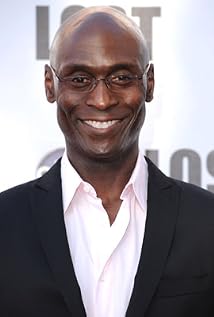
Lance Reddick via IMDb
So that got me thinking about who else I'd cast.  After I saw The Girl with All the Gifts, I was thinking that Sennia Nanua, who plays Melanie in that movie, might be great for Damaya, who is first learning that the world is going to hate her and what that will mean in her life.  It's a more vulnerable role than Melanie in a lot of ways, but Damaya has a stubbornness that I think Nanua would bring to the role.

Image result for sennia nanua
Sennia Nanua via Rotten Tomatoes
Then there's Syenite.  She's a young woman with a lot of controlled anger and frustration, talented at her job and infuriated with her new mentor. I'm thinking Keke Palmer. I haven't seen her in a ton of stuff, but I found her in my research and she seems like a really smart actress with a lot of range.  It's tricky to pick a photo for her, since most of her shots are glamorous, and Syenite is practical.
Keke Palmer via IMDb
And of course, Essun.  Essun is the key, the second person heroine, the one who will be around for all three books. She's the one with the past, full of sorrow and a driving, unstoppable focus on her daughter. She's a bit more mature--a parent, and someone whose illusions have all been shattered so many times that it's amazing she's still walking around.  A big role.

Danai Gurira. She's proven herself playing an action role (The Walking Dead), but the rest of her resume shows so much of the range I want to see in this character.
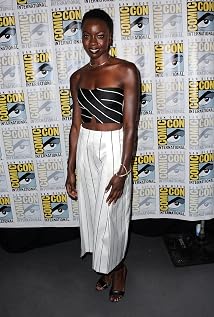
Danai Gurira via IMDb
For Innon, I can't get past picturing Dwayne "The Rock" Johnson, because the role calls for a big, cheerful, goodhearted fellow who makes everyone happy.  But I think he might be too much of a celebrity for it, and it might be too dark for his image as an actor. So I'm coming around to the idea of Okieriete Onaodowan, better known as the originator of the role Hercules Mullligan in Broadway's Hamilton. I think he can do that big, genial, lovable, powerful fellow.
Okieriete Onaodowan via TheaterMania


I was completely stumped when it came to Schaffa, and I was ready to post this without him.  He's supposed to be pale and lean, with dark hair and ice-white eyes, a very still, often gentle character who is reassuring until you get to know him and thereafter menacing as hell.  My problem was that I kept thinking of very old men for the role, but both by physical description and based on the action of the series, Schaffa is, not young, but in the prime of life.

But Lily had the perfect answer to this question: Aiden Gillen. He's almost too perfect, because it's so perfectly in his wheelhouse--he is the most civilized, friendly man in the room.  But he will not flinch when he breaks all the bones in your hand to prove a point.
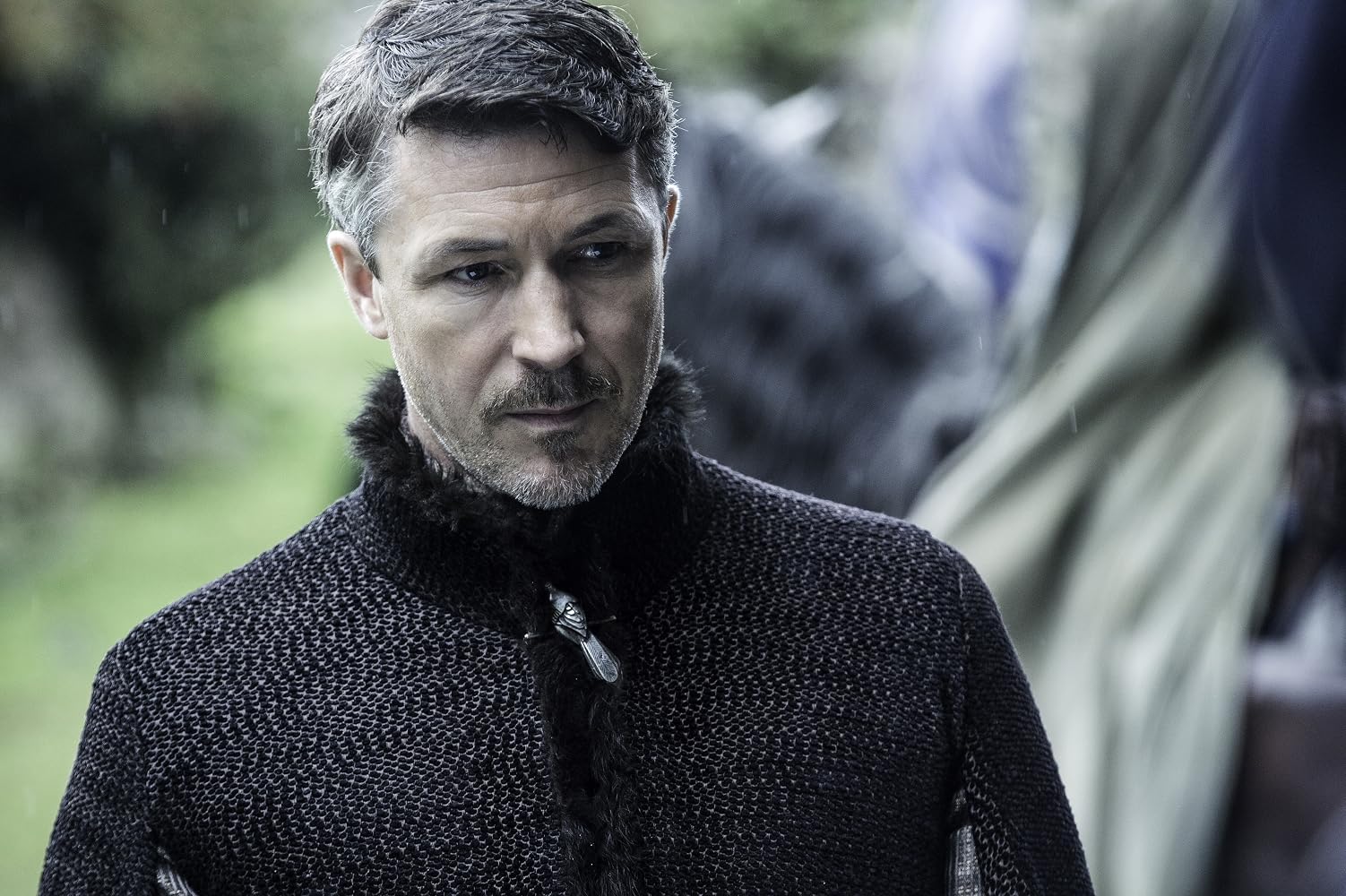
Aiden Gillen via IMDb
Lily also had an alternate suggestion for Essun that leaves me torn: Gina Torres.  Again, kind of perfectly on the nose--stoic badassery is her thing.  Honestly, the only thing I'm not sure of is whether she can do the brittle vulnerability that Essun barely keeps under wraps, because Gina Torres is made of pure steel. She could capture Essun's very precise balance of "I could kill you where you stand and I literally can't think of a reason not to, but it will not get me what I want, because that is something that can never be."  It's a very specific brief, and it's right in her wheelhouse.
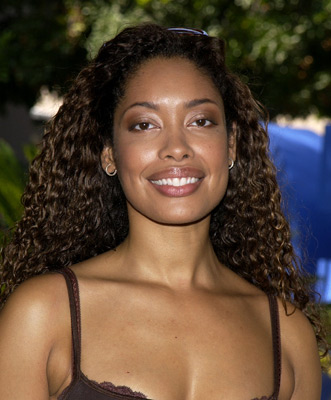
Gina Torres via IMDb

Lily also helped me with Hoa; I was totally stumped there.  She had a suggestion of the kid from Parenthood, which I had never seen, but that kid is in his 20s now.  But the picture made me think of Finn Wolfhard from Stranger Things, and I think he might be my choice for Hoa.  At the very least, he is delicate and pale but also, I could believe he was made of marble.
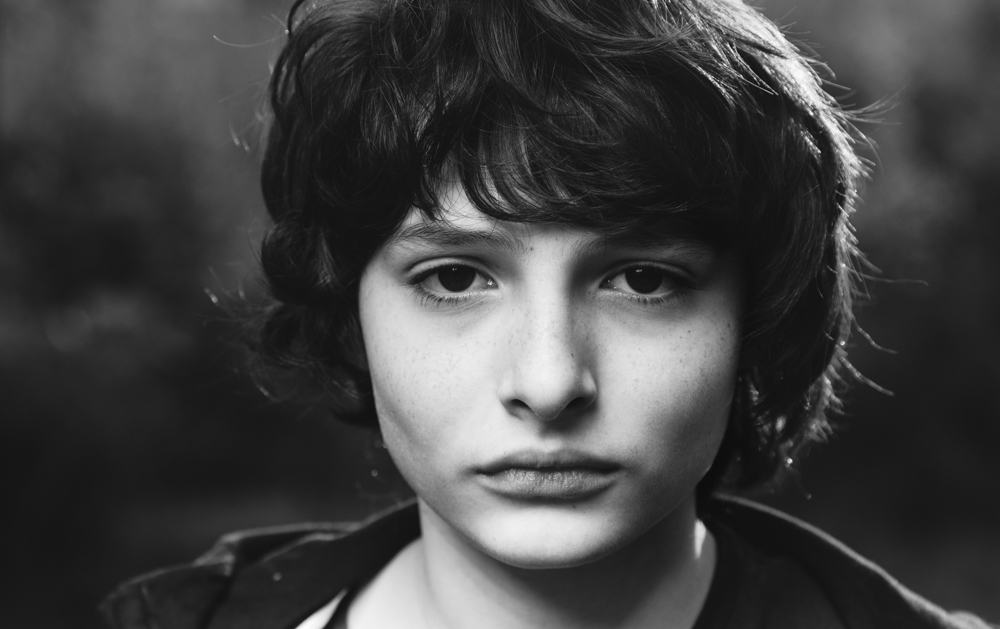
Finn Wolfhard via IMDb
The only character we couldn't be sure of was Tonkee.  I feel like there are a lot of people who could do her--Tracee Ellis Ross came to my mind, though I've only seen her in photos, never seen her act.  But she has that intense, physical, focused kind of energy that comes across as slightly manic (at least on the red carpet) that would fit Tonkee to a T.  I think she might be my choice, but I could definitely be wrong; let me know if she's a good choice.

(I don't want to be too spoilery, because I know a lot of my friends haven't read the books yet but plan to, but I will say that I thought about a different type of actress for Tonkee, but could not ultimately come up with a choice that seemed right, partly because of Tonkee's age and partly because I just don't know enough actresses who meet that criteria.  But suggestions are welcome!)
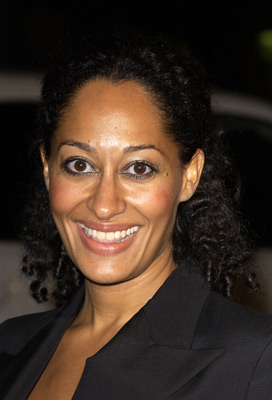
Tracee Ellis Ross via IMDb
So there you have it; the line-up that Lily and I have come up with.  I'm absolutely sure there are lots of other great choices; suggestions, critiques, etc. welcome.  Let's dream big, guys!

I absolutely cannot wait.  The Stone Sky is here on my Kindle.  Squee!

Tuesday, August 22, 2017

Andy Weir ARC Score!

If you loved The Martian, as I did, you have been waiting for Andy Weir's next book.  No one else does exactly his sassy, Capra-esque, hard science thing. I wanted more of The Martian, but I'll also admit that I didn't have a lot of hope that I would get much more than a rehash of the same thing that worked so well the first time.  I was eager, but I can't say that I was optimistic.

But I was wrong!  Artemis was so much fun, and I won't say it didn't have a lot in common with his breakout book, but it's definitely not treading the same ground. If I say to you, "imagine Andy Weir wrote a heist novel on the moon," you will be able to picture Artemis.  If what you picture sounds like fun, well, you're into a treat, my friend.

Jazz Bashara lives in a closet on the moon.  Most people do--square footage is expensive.  But her life is going all right--she's got her little private bunk, her courier job, her local watering hole.  She's even got a solid side gig (well, main gig, really) as a smuggler--Artemis, the moon's only city, doesn't have a lot of rules, but the ones it does have are somewhat strict about things like cigars. 

Jazz is a rough-around-the-edges underachiever, a supergenius (natch) who never finished school because of a series of skeevy boyfriends and a streak of sheer stubbornness.  She's mostly estranged from her father and she's pissed at a lot of people--most of the characters we meet in the first quarter of the book are people she's annoyed with for one reason or another.

When an opportunity to make a fortune for one day of (illegal) work falls into her lap, she jumps on it and the caper is on.  She needs to sabotage some equipment that's outside Artemis's protective bubble.  Here begins the science, as Andy Weir does what he does best, figuring out just what the failsafes and equipment in a place like Artemis might look like, and how a supergenius might sabotage them.  Of course, things don't go smoothly (what heist does?) and Jazz finds friends and allies along the way as she heads in the direction of saving the day.

I loved that there was a big cast of characters and that the relationships in Jazz's life were a big part of the book.  I wasn't really sure Weir could pull it off, but it's heartwarming.  Admittedly, it's not high-level emotional arc or characterization going on here, and the prose is the complete opposite of purple (green prose? is that a thing?). But I liked Jazz the way I liked Mark Watney, and I loved that I got to see her argue and grouch at people, ask for favors and figure things out and trick people and be tricked.

Lately I've been pretty careful with male authors writing female characters, but I haven't got much fault to find here--mostly because there isn't a lot of sex or gender here at all.  I mean, Jazz is a woman, and she talks about how good-looking some men are (which is kind of stilted but not distracting), but mostly, Jazz is just a person, and she's convincing as such.  She's foul-mouthed and irritable and stubborn as hell, which serves her well--Weir is not trying to write "woman," but rather lets her be who she is.

I loved this book. It was so much fun. There were big laughs and low-gravity fight scenes and complicated science explanations and life-or-death ticking clocks.  It's not for everyone, but if you liked The Martian, you want to read this.

(I got a copy of this book for free from Netgalley for an honest review.)

Sunday, August 20, 2017

Romance Titles Algorithmed


Finally they have an algorithm for a girl like me, who is just trying to generate fake romance titles! Check out this article with a fabulous list of names generated by mashing 20,000 romance titles into a neural network.

Now, most of the ones in the article are delightfully wacky--although, as the author of the article who built the neural network points out, actual romance novel titles can be almost as fun. So here's a mini-quiz that covers some of that place where they meet in the middle.

A) The Sheikh's Marriage Sheriff
B) The English Millionaire Investigator
C) Her Billionaire Rancher Boss
D) The Consultant Count

A) The Prince's Virgin's Virgin
B) Virgin Viking
C) The Italian's Virgin Acquisition
D) The Virgin Date of Sexy

A) Christmas of the Year
B) Winning for Christmas
C) A Cowboy For Christmas
D) The Santa Wife

This had me thinking about how I would do by hand what the network did--trying to really operationalize the patterns in the titles and the keys that fit together into them.  I've done part of it before: Verbed by Someone's Noun; His Adjective Noun; Verbing the Adjective Occupation.

In some of the series, it's laid out pretty black and white. Here's the current publisher's page for the Harlequin Presents line. Plenty of Someone's Adjective Noun to go around.

The Tycoon's Outrageous Proposal
Cipriani's Innocent Captive
The Italian's Virgin Acquisition (gave that one away!)
The Sicilian's Surprise Wife
The Prince's Stolen Virgin

But then sometimes you can see the pattern, but you can't quite define it.  Like, if you leave out the prepositions, you've got State of Being [possible preposition] Adjective Direct Object. 

Engaged for Her Enemy's Heir
Protecting His Defiant Innocent
Carrying the Spaniard's Child
Bought for the Billionaire's Revenge

Except that Adjective isn't quite the word for all those possessive nouns.And I'm not sure about the Protecting one really fitting.  I don't know, it's late at night, and I'm looking at these lists and just feeling like

This means something
via Imagur

Tuesday, August 15, 2017

Waste of Space

You'd think a nice staycation would be a great time to get some blogging done, but you'd be wrong.  The beach is exhausting, people.

I got Gina Damico's Waste of Space as an ARC from Netgalley quite a while ago, but I didn't read it till recently because of the PDF Problem. Books with interesting formatting often offer PDFs instead of Kindle files, and with some, like Waste of Space, the formatting can't translate onto my e-ink Kindle.  I ended up reading it on my computer, and I'd recommend a paper copy if you're going to read it.

Waste of Space is a scathing satire of reality TV, modern stupidity, teenagers, and basically everyone.  An insanely slimy and deeply stupid internet TV producer named Chazz hooks up with an organization called the National Association for the Study of Aerospace and Weightlessness (NASAW, aka low-rent NASA) to fake launching a dozen teenagers into space for $$ratings!$$. 

The teenagers are awful, except our hero and heroine. Hibiscus is a mindless, crunchy hipster. Clayton is a rich ass after fame. Snout is...well, actually a decent person, but since he's the hick from the sticks, he talks with a heavy accent and only tells stories about his pet pig Colonel Bacon (who is on the ship with him). Bacardi is the woo girl who stays sloppy drunk and makes out with random people.  There's an overachiever, a girl who speaks only Japanese, a supernerd--every stereotype you can imagine.

Plus our heroes, of course.  Nico, whose parents died and who is really shy, and Titania, who is running from her Troubling Past.

They go into "space," with a weekly half hour show and a live feed. Unbeknownst to them, they're on a sound stage being managed by NASAW scientists at the behest of Chazz.  The world is watching with bated breath, though it's not entirely clear if the world is hanging on a bunch of kids in space or an audacious reality TV gambit.  Either way, the world is full of people who buy this hook, line, and sinker, in spite of it making not a lick of sense.

This is what it comes down to--the book is so heavy handed that it ceases to be satirical and becomes slapstick.  I'm not going to let the YA designation get it off the hook for that--reality TV can be such a parody of itself that you almost can't make fun of it, but that doesn't mean the solution is going so far over the top I can't see the top in the rear view mirror.

Essentially, every character here was such a parody, and the entire cast (including the watching world) was so devoid of common sense, that I didn't have anyone to latch onto.  Even our POV characters, the kids who were pretty "normal" in the cast, were just exaggerated versions of the characters you root for on reality shows.

The coolest thing about the book was its form, as a collection of found documents and transcripts of both broadcast episodes and unaired footage.  The anonymous intern who put the book together and sent it to the Center for Missing and Exploited Children is the person I'm most likely to sympathize with in the whole thing, and she barely appears herself.  But she is the only sign that the world that real people inhabit has any relationship to the one in the book.

I can't say the book wasn't pretty fun, especially the few characters who you learn more about at the end--there's no real development for anyone, but there are some revelations that keep you interested. The boredom of living in a reality TV house between stunts is pretty well-evoked, though I can't say that's a selling point.  But there are some great lines, and honestly, I kind of wanted to meet Bacardi and Snout.  If I had to spend a few weeks trapped in a fake space plane with a couple of teenagers, I suppose I could do worse.

Thursday, August 03, 2017

HIPPO COWBOYS, Y'ALL

Best. Premise. Ever.

First, go listen to this segment on This American Life: "Hungry Hungry People." (Or you can read the Kindle Single on the same story.) It's the true story of how, in the early part of the 20th century, Congress considered solving a food shortage by populating the Louisiana bayou with hippopotamuses.

In her novella River of Teeth, Sarah Gailey takes that proposal, pushes it back 50 years, and imagines the cowboys who would herd and manage hippo production.  This is an amazing alternate history premise.

It's put to the service of what is essentially a heist story, in which five sketchy folks team up to pull off an elaborate plan that will make them a big pile of money--clear this big stretch of water of all the feral hippos. (Also, one of the characters is out for revenge.)

Verdict: more heist than the book could handle; not nearly enough worldbuilding.

I am really hesitant about "I wanted more" as a criticism of a book, because the best books are able to create realism without drilling down into all the detail, and evoking a fully realized reality is often enough.  But I wanted more here because reality did not feel as concrete or specific as I wanted it to be.  It's not that I needed more heist, or more backstory, or more time with the characters.  I needed a deeper understanding of what was going on. 

One issue was that there were just too many characters for a novella.  Five folks on the job, the villain, and the lawman.  If the five on the heist had been an established team who fit together neatly, that might have worked out, but the amount of infighting and double crossing and getting to know each other was just overwhelming, and I felt like I got only a loose sketch of most of the characters.  They were all very different, but I still had some trouble keeping track (the two main female characters both had names that started with A, which confused me more than it should have). 

I'm a bit skeptical about the hippo lore, too.  I assume the author did plenty of research, and I know that hippos are violent and dangerous, but they are not generally meat eaters unless driven to it, so the "hungry" element of the danger of the ferals seemed out of place to me.  If it had been explained why they were so eager to eat people, maybe it would have felt more real? 

Also, we didn't find out what the heist was about for the first half of the book. There's the actual, legit job, the trick they have to make it worth their time and money (but if that was the plan, why did they need a con artist?), and the secondary goals of all the main characters.  It was too much and it never really came together for me.

Which is a shame.  Because hippo cowboys, y'all.  Hippo. Cowboys.

Tuesday, August 01, 2017

Back from the Land: In Which Hippies Take to the Woods

Alternate post titles I considered here: "Schadenfreude: Wood Heat Dries Your Sinuses; Hauling Water is Hard," or "On Not Knowing What We Don't Know."

This might be the first time I really wished I track where I find the books that end up on my to-read list, because this one was a direct reference from somewhere--another book, a blog post--and I found reading it to be SO interesting that I wish I could go back and retrace my steps.  The book Back from the Land: How Young Americans Went to Nature in the 1970s and How They Came Back, by Eleanor Agnew, started out by scratching a very particular itch that I have and ended up leaving me feeling like I had some insights into the author's personal defense mechanisms and personal narratives.

The itch--the reason I picked up the book--is because I love "huh, farm life maybe isn't so idyllic after all" stories. City folk moving to the country and trying to chop enough wood to get through the winter amuses me.  City folks being shocked at how heavy buckets of water are makes me feel--here, I'm admitting it--superior.

I'm not proud of it.  Honestly, I don't deserve the superiority; I'm not the one who woke up twice a night to feed the wood stoves when I was a kid.  But my parents did, every night.  My father had to tromp 100 yards through the snow to feed the greenhouse fires, too, every night of February and March and most of April, for years. I just had to fill the wood box in the entryway from the shed in the barn, and even then, not often.  I was spoiled.

But I know how hard all this stuff is, which is why I get satisfaction watching noobs learn things that my mom is an expert on (cooking on a wood stove is hard!). It's similar to what I enjoyed about Kristin Kimball's The Dirty Life: A Memoir of Farming, Food, and Love. Kimball brought a wry self-deprecation to her recollections of starting this out.  Or what I liked about the This American Life segment called "Farm Eye for a Farm Guy." Listen to it--it's only 20 minutes long and it's super great.

This is what drew me to the book, and the reason why, as I read the first chapter or two, I kept reading passages out loud to my family and chuckling.  These folks are so naive!

What kept me reading, I think, was the insights into the author. Eleanor Agnew moved from, I believe, Pennsylvania with her husband and two young sons to live on a homestead in Maine. (If you are going to live off the land, why would you pick a state in which winter lasts 8 long months? Did you even think about this?)

The book contains her own reminiscences and those of many other friends and acquaintances, back-to-the-landers from all over the country who lived everywhere from communes to wilderness to small farm towns.  She seeks out the threads of commonality to their experiences--including how they end--and that's interesting and worthwhile. But in the end, it is also very anecdotal, and the citations and statistics drawn from sociology and economics don't add any rigor to what is essentially a group memoir.  As a memoir, it works somewhat, even with so many voices and experiences represented. As a study, even a pop-social science study, it doesn't stand up to any scrutiny.

The author has an agenda: she knows that their philosophies were sound, even if they weren't strong enough to live them out.  She believes that "mainstream society" is full of materialistic sheeple, but back-to-the-landers--even those who have rejoined the mainstream and are now architects and college professors--are still pure of heart.  She describes how much she values nature, and how she gets such bliss observing the koi pond in her backyard in the subdivision she lives in.  See, she values nature in ways that other suburbanites do not. 

This sense that the internal lives of the people who share her beliefs are virtuous and consistent and justify whatever outward choices they're making, while the internal lives of others who make the same outward choices are suspect, is pervasive in the book.  She talks about how hippies didn't need fancy new cars, and then she discovers that wow, an old car in a Maine winter takes a lot of upkeep and often means getting trapped in your backwoods home. She even says explicitly that she would not mind at all having a new car, because it would be a safe and reliable connection to the outside world, but doesn't follow that line of thought through to the notion that maybe other people who get new cars have useful reasons, whether practical or psychological.

xkcd.com 
Maybe it's because I've been thinking a lot lately about intersectionality and other people's points of view, but this seems like a huge gap to me.  Maybe it's because she is thinking of the society of the late '70s, when Ronald Reagan was about to get elected, and that kind of cynicism is justified.  But the time she spends near the end of the book justifying how okay it is that they've gone mainstream but they're still more virtuous and in touch with the harmony of the universe than other people just frustrated me and really detracted from the point she never quite got to about what made life more authentic if you have to haul water instead of using pipes.

Also, darn it, she misused words and ideas in a few places.  I don't want to be pedantic, but "I was donned in my uniform" is not how you use that verb; the fact that the average life expectancy was 18 years does not mean that no one lived to grow old; the goal of the pioneers was not to live in harmony with the land, but to gain economic security and prosperity so they could improve their lifestyles.  They lived in dugout houses so they could later afford nicer ones, not because they wanted to live in dugouts.  They would not have said no to running water.

So in the end, my satisfied schadenfreude about the naive kids getting in touch with mother earth was replaced by a kind of sad schadenfreude about baby boomers who still think that they have it all figured out.  I'm reminded of my father's old saying: "My opinions may change, but not the fact that I'm right." Agnew has readjusted her view of the world so that no matter what they do, she and her friends have cornered the market on virtue.

Sunday, July 30, 2017

The Sticks and Bones

Seanan McGuire's Down Among the Sticks and Bones, sequel to her novella Every Heart a Doorway, is the story of Jack and Jill and their door, and how they came to the Moors in the first place.

My favorite character in the first book was Jack, so getting the story of Jack and Jill here was so delightful. I didn't want to put the book down, at all, and when I finished I went back and reread Every Heart just because I wanted a little bit more.  I love how dark this story is, and how many things Jack and Jill are not to each other, even when they are always sisters.

The story can be split into two parts--their life before the door, that turned them into people fit for the Moors, and their life after the door, in their new home.  I had actually expected the part in our world with their parents to be brief, more prequel, but it is actually a substantial part of the story.

I got frustrated with this part a bit, because it creates a lot of distance.  First, the parents are inhuman.  Like, the fact that they're stiff and prim and have all the wrong priorities is not inhuman, but they seem to have no perception of other human beings as people, especially their daughters.  It's so exaggerated as to be--and here lies the twist--fairy-tale-like.

And that's the thing that I realized about the first half--this is the odd, distanced, abstract telling of a fairy tale.  My other complaint was how much showing instead of telling we get, and how the girls end up acting like archetypes, even when they know they're not. I've always said that I'm not a huge fan of fairy tales themselves (though I'm down with a good retelling) because they are not about character at all, and the first part of this book is an exaggerated version of that. 

But this is all the more to contrast with what happens when you get to the Moors.  There, each character is specific and individual. The Master--an actual inhuman monster--has more individual personality than both of the twins' parents put together.  Dr. Bleak is very human, even as he is harsh and abrupt.  Even the villagers seem more real than the people who attended their parents' barbecues--they perceive what's going on around them and react to it in emotionally appropriate ways.

Reading this book was pure pleasure, and I love the person Jack becomes.  She's cold, and hard, and flawed, and that's partly who her mother made her and partly who Dr. Bleak made her and partly who she just is.  But she's smart and determined and acts with surprising generosity.  I think that a cold, hard person who is also generous is a character type that I'm a sucker for, is what it comes down to.

The third one, Beneath the Sugar Sky, comes out next January, and Tor previewed some of the illustrations (with a few short excerpts) today.  It's about Sumi, who deserved a better ending. I truly cannot wait.

Thursday, July 27, 2017

Romance Titles Redux (Sorry, No Quiz)

I just....even as I read more romance, an accumulation of romance novel titles will always amuse me.  Especially when they're clustered into types, by publisher or pub date.  Like, this is literally the list I'm looking at of upcoming releases.
Twins on the Doorstep
The Navy SEAL's Promise
Garrett Bravo's Runaway Bride
Buying His Bride of Convenience
The Italian's Pregnant Prisoner
Sleigh Ride with the Single Dad
Christmas Amnesia
Amish Christmas Twins
These are JUST the ones that are all in a row.  There are others on the page that are great (One Night Stand Bride), but they're mixed in with less bluntly-titled volumes like Courting Danger with Mr. Dyer and Never Christmas Without You.

I see two clear groups: Heartwarming Domesticity and Dubious Consent, with a couple of fun oddballs thrown in.  Christmas Amnesia is kind of my favorite standout here.  I kind of want to add mechanical birds and a sentient sockpuppet for a kind of absurdist Hallmark Movie.

Tuesday, July 25, 2017

Six Wakes

Mystery! Sci fi! Thriller! And what does it mean to be human? All this and more, tonight in my review of Six Wakes, by Mur Lafferty.

I feel like I'm coming very late to this party, so you can't possibly have missed this one. I mean, aside from the fact that I read this a month ago, everyone else reviewed it when it first came out--wait, was that earlier this year?  Whoa, it feels like twice that long.

Excuse me, I've lost track of the scale of time.  Gonna go stare into space and regain my perspective.

Which is an interesting segue into the fascinating conceit of this novel, which is that the main characters are all clones. Some people, you see, choose to clone themselves--you grow a new body to adulthood, make a mindmap, and when you die--of old age or an accident--your most recent mindmap is uploaded into the new body and you just keep going from there.

The laws governing clones are very specific: no cloning the living. If that happens, the newest clone is the "real" person and the previous one has no legal right to existence.  No altering mindmaps or genetic structure of the person.  Despite these rules, cloning is controversial, largely on religious grounds.

The six particular clones in this story are the crew of a generation ship--cryogenically frozen people and saved mindmaps and genetic information for clones are stored on a ship that is being sent on a 200 year journey to a habitable planet.  These six crew members are going to monitor the ship for 200 years, cloning themselves as necessary to get through it.  They also all happen to have criminal records, which will be expunged at their new home.

But--the book is a locked-room murder mystery.  Their clones all wake up with no memory of the last 30 years; the last thing they remember was the day they departed.  Their bodies are in various states of murderedness (including one at Not Quite) and the computer AI has been sabotaged.

This is our story.  These six people suspect each other, and as they try to solve the mystery of their own murders, their various histories (with various levels of nefariousness) come to the fore.  They can't trust each other, and all of them are some flavor of messed up (some with violent pasts), and the AI (also not entirely trustworthy) is starting to come back online and look over their shoulders.

So yeah, it's pretty great.  There are a lot of unlikeable characters, but also a lot of likeable ones, and you can't be sure who to trust from either group.  A lot of the story revolves around the last few centuries of cloning history (which of course all of these people have experienced), and the question of how to protect the rights of a new class of citizen with many physical advantages over other people and much social prejudice--well, that's one of the most interesting parts of the book.

As I said, I read it a month ago, which is a million years for me, so I'm not feeling it as viscerally now as I did then. But it was a compelling read, and I really appreciated that some of the characters had personal opinions that were very angry and unappealing to me, but were painted as fully human.  Everyone here was the hero of their own story, which I think is one of the main truths in life.  The recognition of that always makes a book stronger; it definitely did here.

Sunday, July 23, 2017

Excuse Me While I Go All Rageballs

Welcome to Feminist Outrage Corner!  Not that I need a new thing to rant about, and not that I have much to add to this post from Smart Bitches, Trashy Books.  The title says (almost) everything: "Male Authors, Thrillers, and Ambiguous Pen Names." Go read that article first, because they cover most of my feelings there. And in the comments. And the linked articles.

I mentioned I recently got into thrillers.  I hadn't put this together, but women-written, women-centric thrillers are part of the reason for this.  First, because even when they're tropey, they tend to be less sexistly tropey.  Second, they tend to be very much about the experience of the characters as human beings. I'm pretty unabashed about this right now; it's not that I don't read books by men, it's that I am skeptical of picking up books by men.  They have to clear an extra hurdle to make my reading list, for reasons like this, thriller or no.

Anyway, I read Final Girls recently and didn't like it. I felt like the main character's thoughts and her feelings and her actions were all out of alignment.  And I guess you could attribute that to her recovery and the ugly stuff that's dredged up over the course of the book, but it just felt off to me.

So now, when I find out that Riley Sager is a pen name for a dude, I have two feelings. The first one is, yeah, that explains it.  This is what a dude thinks a girl is like. She says she feels one way but then acts another. She doesn't even know what she wants.  Chicks, you know? With their cupcake businesses.

Second feeling: yes, when women get a little wedge of the thriller market, you know what that corner needs? More guys. And if they won't let you in, sneak in the back.  And to anyone who compares this to JK Rowling publishing under her initials, I can only say that there is a huge difference between trying to beat a system that's stacked against you and trying to win more in a system that's stacked for you. There's a huge difference between sitting in the wrong part of the bus if you're white and if you're black.  There's a huge difference between wanting to go to an all boys school and an all girls school.  Someday there might not be, but right now there is.  One is making a little room for yourselves in a space that tries to shut you down; the other is taking a space you already dominate and keeping Them from getting in.

I'm not upset that he wrote from a woman's point of view.  I think that's great.  If he'd used his own name, I'll admit I'd have been more skeptical before picking the book up, but if it had been good, I would have given him full credit. I don't mind the anecdote in the article where a guy tried on a bra to make sure he was describing the process of getting dressed properly (though the first time you put on a bra is insanely awkward; you have to do it every day for months to get it smooth). That's research; people take trips and look at buildings and eat new foods to describe them properly in books. 

It's that they're lying.  These aren't pen names for privacy. They're pen names to trick me.  And sometimes they work, which, okay.  I liked Before I Go to Sleep and didn't realize it was a guy, and that doesn't change my opinion.  But I do feel a little lied to.  And the more I think about that as being deliberate--as figuring out what I want and then conspiring to give me something else, hoping it will be good enough--the more I'm just mad.

Anyway, thanks, Smart Bitches, for the rant.  No, really.  I feel like my vision is getting clearer and clearer, and even when that's painful, it's definitely a good thing.

Wednesday, July 19, 2017

The Collapsing Empire

It's stupid how I always forget how much fun John Scalzi is until I read another of his books, and then I want to eat them all up.  Maybe it's because they're a little light--not that they don't deal with interesting and complicated ideas, but that they are so upbeat and amusing that I retain that and forget the meat of them.  I think that happens with Terry Pratchett, too, which says something.  Their books are always better than I remember them being, even when I remember them being very good indeed.

I finally picked up The Collapsing Empire because Linden and Elizabeth both loved it soooooo much.  Like the kind of recommendations that are hard to ignore.  The first three or four chapters are all from different points of view, so I actually found it a little tough to get into at first; just when I got invested in someone, we'd move on to the next someone.  Eventually it leveled out at three main characters, though, and two of them come together--if not physically then into the same storyline--fairly quickly, so that slowness falls back pretty quickly.

And all three characters are COMPLETELY likeable. (I feel like the fact that I'm talking about the likeability of the characters says a lot about this as a science fiction novel--which is to say that it works really well on a human level.)  Cardenia, as a younger and bastard daughter, was never supposed to rule an empire, but when her older half brother died suddenly, she suddenly became the heir to everything. Her matter-of-fact attitude is just what you want to see in a Leadership Thrust Upon Her scenario and is immensely satisfying. 

Marce is the son of a minor nobleman on a planet called The End because it's just so far away from literally everything.  He's an academic with important information (about how the empire is collapsing) that he has to get to the emperox. He's just kind of a dude, but he's likeable for all that--very much the Everyman buried over his head in intrigue.

If it was just them, I'd say they're TOO likeable.  Like, rational, level-headed, pretty flawless Normal People.  Their biggest flaw is they're so straightforward that maybe they're not nuanced enough.  But then you get your third hero--Kira.  She's the daughter of a wealthy merchant house that's caught in the middle of another house's power grab.  Kira is foul-mouthed, impatient, frank to the point of being insulting, and frequently gets distracted by sex.  She's also immensely good at her job (which is basically making money in any way that can be painted as legal or well-laundered), which makes her the most fun character to follow.  Like Marce and Cardenia, Kira is super-competent, but she's not an obvious white-hat good guy, and I think the strength of that really carries the book in a lot of ways.  I was free to love the lawful good heroes because I had this chaotic neutral to cleanse my palate.

The story is about a space empire that is linked by the Flow, which is the only way for ships to travel the vast distances of space.  When the Flow begins to change, the thousand year old empire is going to have to change with it.  But of course (as we all know), changing an enormous society--including bureaucracy, religion, class system, and financial system--because nature is telling you that what you're doing ain't gonna fly no more is not as easy as it sounds (*cough*globalwarming*cough*), and the attendant intrigues begin.

My main criticism matches that of Thea from The Booksmugglers--namely, this story doesn't stand alone.  I had no idea it was going to be part of a series until I was halfway through, but this is definitely one-third of a larger story, not a story in itself.  I liked what I read, and I wasn't trying to rush it, but I don't think it's served by being split up--I think I would much rather have read one 1200 page book than this and then two more later.  Not just the cliffhanger problem, but the fact that everything I've read so far is prelude.  I think going into it as part of a serial story is going to work better than as a series--even though the next installment is over a year away.

Ugh, a year.  Well, at least I'll have time to catch up on all the John Scalzi that I don't know why I haven't read.  Ghost Brigades, here I come!

Sunday, July 16, 2017

Fabulous Magical Spies

The first time I read the blurb for Murder, Magic, and What We Wore, I knew I would be reading it at the earliest possible moment.  Lady Annis and her aunt are left penniless on her father's death, but Annis discovers that she has a skill that might solve their money problems--she can sew glamours. With a few stitches, she can change a wool garment to silk, or keep the wearer safe, or make her unnoticeable.  Annis has an eye for fashion; she thinks they have a chance.

But she's also begun to suspect that her father was on more than a business trip when he died--that in fact, he's been a spy. She approaches the Home Office and offers her services, but when they turn her down, she may have to figure out how to do her part for England on her own.

I read Kelly Jones's previous book, Unusual Chickens for the Exceptional Poultry Farmer, out loud to my son a couple of years ago, and we really loved it. This move into YA has all kinds of delightful elements--spies! balls! magic!--but I really, really wish they'd come together into one cohesive picture. Each of the parts is quite charming and delightful, but I got a bit of whiplash moving between them.

When Annis and her aunt find themselves destitute, they fear they'll have to be governesses or paid companions--a fall from social grace and a very limiting life.  Annis's skill might be able to save them--but becoming a seamstress, even a glamourist, would still exclude her from her social circle.  So her idea is to become a secret glamourist.  With the help of her maid, she disguises herself an an old French woman, Madame Martine, who is the new modiste in a small town outside of London.  Annis can have a normal social life while Madame Martine makes enough money to live on.

This is my favorite part of the plot--if you left the spies out of it completely, I would have loved this book.  Annis is completely overconfident (she's excellent at repairing and altering dresses, but quickly realizes she's never made one from scratch before), the pressure of being penniless is a wonderful tension, and her growing friendship with her world-wise new maid is absolutely heartwarming.  Annis is maybe too successful at everything--the upper class, they really are just like you and me--but it's charming, and she puts snobs in their place, demonstrates the actual, literal importance of clothing in the lives of young women, and finds her own competence.

At the same time, though, she's trying to unmask a plot to break Napoleon out of exile, and trying to get hired as a spy, and it's the clunkiest thing in the world.  Again, Annis is overconfident, but it comes across as much more arrogant.  I also saw through pretty much all the plot twists here (is literally EVERYONE in London a spy?), and all the suspicion just got in the way of the really sweet story of a girl trying to earn her own way in the world.

The book was so charming that I wanted to love it, and I'm going to read the next book Kelly Jones writes, because the premise here is so delightful, and what works here works so delightfully well.  But the pattern didn't quite come together into the beautiful piece I wanted it to be. 

I received a free advance copy of this book from Netgalley for review.

Monday, July 10, 2017

Thrillers, Backfired

In following up on my thriller kick, I requested Final Girls, by Riley Sager, from Netgalley. Not to be confused with the Mira Grant book by the same title, this is a thriller about a woman who survived a horror movie scenario as a teenager and, ten years later, finds the safe boundaries of her comfortable life tested by a visit from a fellow "final girl."

Let me summarize my feelings with an anecdote. I was looking at a list of summer's best thrillers on Kirkus and when this book popped up (with a star!) my response was, "dammit, now I can't trust the rest of the list!" Sadly and in short, I did not love this book.

It started out really promising: Quinn lives with her perfect boyfriend in a perfect apartment in New York and runs a perfect baking blog. All is well. She is completely over what happened to her ten years ago, when her spring break trip to Pine Cottage ended with a slasher murdering all her friends and her running screaming out of the woods with no memories of the past hour.  She's fine. Even if the only people in her life besides her boyfriend are the cop who rescued her that night and another Final Girl.

The Final Girls are a club of three women who survived similar horror stories.  Lisa was the sole survivor or a sorority house massacre; Samantha survived a murderous rampage at a motel.  They've never met, but they've emailed, and the press is fascinated with them. Mostly that's in the past, though, until the beginning of this book, when we find out that Lisa--the oldest of the three, their den mother and emotional center--has committed suicide.

As Quinn's carefully composed life starts to fray at the edges, she's in for another surprise--Samantha, who dropped off the map years ago to avoid the press, appears on her doorstep. Quinn is torn between wanting nothing to do with the role of final girl that they share and a strange fascination with the other woman.  Thrillerly hijinks ensue.

I didn't hate this book, but I might under other circumstances have stopped reading it.  There are two ways to do this kind of heavy-handed thriller--one, go serious.  Throw the horror movie script out the window and think about how real people would behave in the very real scenario of something ridiculous and unbelievable.  Two, go the other way--total camp.  Maybe this is a world where horror movies don't exist, so no one can even imagine this situation.  Or maybe you just go over the top in a Cabin in the Woods type homage to the tropes. 

What you can't do is use the tools of camp--heavy-handed adherence to tropes--and take yourself this seriously.  Like, we're not just talking murderers, we're talking murderers with interesting weapons and face masks.  You can't treat that like a real thing that happens without building a whole world around this.  This book set up the horror to be too campy and then took it way too seriously.

Plot-wise, I couldn't figure out where things were going for a long time, and I actually found that most confusing.  The best part of the book was the last quarter, when I had finally figured out the trajectory of the story (and the twist, probably too early). The mystery here is whether Sam is who she claims to be, and whether she's got evil intentions or not.  But the thing is, she's so clearly and completely messed up that I just didn't care if she was explicitly sinister or just kind of a jerk. 

There is a thing that happens where you're drawn to someone horrible and you fight with them and try to walk away but it doesn't work and you just keep sitting down to drink Wild Turkey with them after midnight.  But--and maybe this is just me--I would never, ever do that with someone I didn't trust, so I could not understand Quinn's behavior toward Sam.  It made the book feel like a random assortment of happenings, rather than character development around a plot.

I think this speaks to a bigger problem with getting involved in a genre that's new to you.  I know my favorite genres (sci fi, fantasy) inside and out. I know the tropes and can see them from a distance, and recognize pretty well who's going to play with them vs. adhere to them vs. butcher them.  I know the backlist and the frontlist and what's coming next season and can winnow down what I want to read with comps and recommendations. 

But in a new genre, everything is unknown.  Who's advice do a trust? Whose taste do I agree with?  Not just which writers are good, but what style of thriller to I even enjoy?

I'm still learning.  And with romance or mystery, I can find trusted recommenders from other genres who can get me started.  Thrillers, though, I'm flying blind. 

So let's see what's next.


Wednesday, June 28, 2017

Pet Peeve: Femmephobia

I've recognized this for a while, but I'm going to hereby codify it: if a book starts in the first few pages with a young woman moaning about how annoying it is that she has to hang around with other vapid young women, I'm out. This is especially bad in historical fiction or fantasy, where you have a princess (or other noble woman) who wants to be outside being a tomboy, or in the lab studying, but instead has to talk to people who are only concerned with clothes and gossip.

I'm sorry to say that this why I'm not planning to read Meagan Spooner's Hunted. I've never ready anything else by her, and I've heard her widely praised, and I'm not going to pretend that this is a review of the book.  It's not--I'm pretty confident, actually, that it's a good book.

But I really, really hate the shortcut to letting us know how great our heroine is by comparing her to all those other girls who are so shallow.  Most people have trivial interests and passions that can look like trivial interests to outsiders.  The heroine here, Yeva, would rather be hunting than sewing with the other ladies; in some books, the problem is a young man who would rather be reading than hunting.  It's not the specific pursuit; it's the dismissal of it as shallow, unworthy, and trivial.

It's especially bad, though, when it's girls being called vapid for acting like girls.  Our excepto-girl is a tomboy, so that's okay then.  I don't mind at all if she doesn't want to embroider. But I am surrounded by brilliant people who will tell you; an interest in needlework does not make you vapid.

Peace out.

Sunday, June 25, 2017

Strange Addiction: Thrillers

You know how sometimes you get a craving and you just have to watch four or five episodes of Buffy the Vampire Slayer every night for a month, or reread as much of the Babysitters Club series as you can lay your hands on? As one does? Well, for some reason, I've been overtaken by an unfightable urge to read thrillers.

I think it might have started with Ararat, actually, which was more on the horror end, but which seriously let me down in the adrenaline department. Then I read Emma in the Night, which enthralled me for some reason--just the right amount of dread versus mystery, knowing there were secrets and having to discover what they were.

That was so satisfying that I wanted more right away. I jumped right into Still Missing, by Chevy Stevens, which was on my radar for some reason I don't even remember--probably just because the library got the ebook and I turned it up trolling for new purchases.

At first, I wasn't even aware what itch I needed to scratch, but the "missing girl returns and we learn what happened while experiencing the aftermath" premise was just like Emma in the Night, which I think is why I picked it. At the beginning I wasn't sure about the book, because we start right in with the narrator telling us (well, telling her therapist) about her abduction and the long months she spent trapped with her kidnapper.  It was well written, and exactly what you'd expect that story to be--messed up man, woman trying to survive, getting her head messed with, indignities and violations and horror.  It felt....salacious.

I think I kept reading because of the structure--the chapters are numbered sessions, and the story is essentially a monologue of Annie talking to her therapist.  We never hear the therapist's voice, but Annie does make reference to her advice, and to the strategies she tries to deal with so many of the problems she's still struggling with.  I find that process intriguing, and that kept me reading.

The further into the book you get, though, the broader picture you get, and the more the story of Annie's life now emerges. While the abduction was fascinating in a horrible way, the recovery process was so interesting.  Her mother has never been great; her best friend is too pushy; her boyfriend (ex?) is patient and kind.  But as the story unfolds--both on the mountain and of trying to fit back into the world, it becomes obvious that there is still unfinished business, and that the "now" period is not just emotionally fascinating, but full of danger, as well.

So I really couldn't put this book down, though I think in another mood I might not even have picked it up.  I will say that, as much as I loved the therapy envelope story, I did find that the book didn't actually read like a monologue.  This is one of my pet peeves--epistolary novels, or first person accounts that claim to be in the narrator's voice, but that lapse into author-speak--sentences constructed as a writer constructs them, not as a character would say them. In this one, each session starts out with Annie addressing the doctor in her own voice, but as she starts to talk about what happened (as opposed to her current feelings or addressing the doctor directly), her voice quickly changes.  I didn't mind the style at all, but I found the transition in every chapter discordant.

Makes me want to write an epistolary novel, firmly staying in character.  If anyone wants to write a corresponding novel with me, let me know!

So now I'm done with my thriller and have to decide whether to shift back to one of the many other books I'm in the middle of (space mystery! historical fantasy!) or just greedily scoop up something else about someone being stalked or unearthing an ancient evil or suspecting that their dentist is out to get them.  Who are we kidding? It's summer! Bring on the thrillers.

Tuesday, June 13, 2017

Murderbot of My Heart

Everyone was all excited about All Systems Red before it came out, but I'd never read any Martha Wells before, so I couldn't figure out what it was by a pretty straighforward-looking "cyborg soldier protects people" story that had all my bloggers quivering with anticipation. But hey, I put it on reserve and waited and waited and waited and the reviews kept coming and finally I gave up on the waiting and bought the darned thing and read it and OH MY LORD was it good.

(Note for the record: me buying a book and reading it in the same month is, like, unheard of.)

Our surveying party is investigating a new planet to investigate whether it's worth it to buy the rights to its natural resources.  They've been outfitted for the mission by the Company, which does such things--habitats, scientific equipment, life support, transportation, and a SecUnit, a security bot, who is our narrator.  It calls itself murderbot; it doesn't have a name.

The SecUnit isn't typical; its governor drive, which is supposed to control its behavior and prevent anything unauthorized, has been hacked.  Murderbot hacked the drive itself, but mostly nothing's changed--it goes on missions, takes care of its people, and just wants to be left alone to watch the entertainment that it's downloaded--mostly serial dramas.

But something's gone wrong with the other outpost on the planet, and it looks like someone might have it in for our team.  Murderbot's gotten kind of fond of this team (OH MY GOD SO HAVE I) and they have to work together to figure out what's going on.

Okay, so this is kind of perfect.  The thing that's so great is our protagonist's voice, which is kind of sardonic and kind of wistful and incredibly natural.  It's observant and smart and competent, but also laid back and funny and reserved.  This is what everyone's been talking about, and no doubt, it made the story.

But what doesn't get enough credit is the story itself, which serves as a setting for the character to unfold.  The book is a novella, which means it's pretty short, and pacing can be tricky here--you can't have too many twists and turns.  But the fact is, the "what's going on on this planet?" mystery is, well, not a MacGuffin, because we are very concerned with how it will turn out and it is definitely life or death.  But it's the perfectly paced and structured opportunity for these characters to unfold.  Any slower, lingering on the characters, and it would get sentimental.  Any faster and it would be Dan Brownish.  Instead, you get the perfect balance.

We get to watch Murderbot spend more time reluctantly with the crew, and to meet the crew themselves.  We get to know Mensah, who is just a model of great leadership (and to learn why), and Ratthi, who is sweet and maybe sometimes spacey, and Pin-Lee, who is more competent than a robot in a lot of ways, and just all of them.  They are likeable.  And then you have Murderbot, who basically has severe social anxiety, but who's still fond of these people.  As things get darker and more real, the bonds they're forging get stronger, in spite of all the differences.

Honestly, as an extrovert surrounded by introverts, watching the crew interact with Murderbot was just so poignant.  They try, and then they try to try the right way, but it doesn't feel right, and they slip, and it's just so damned sweet and funny and I loved every minute of it.

Lianna, I'm sorry, I know your list is full. But you have no choice; you have to read this one.

Sunday, June 11, 2017

Emma In The Night

I never thought of myself as a reader of thrillers, but lately I've been picking them up more and more often, and weirdly they've been working out for me. I think I requested Emma in the Night, by Wendy Walker, from Netgalley because I liked the title, and maybe the cover.  And it was one of those many "girl comes back from her mysterious disappearance, but where has she been?" stories that seems so popular lately.

The funny thing is, the only way to make a story like that work is for there to be a decent amount of characters hiding information from the reader, which frequently drives me up the wall (see my opinions on Jodi Picoult).  Secrets may be kept for a reason from other characters, but if you're inside a character's head and they're thinking about The Truth but not telling you what that truth is, well, that's cheap dramatics.

So it's a fine line to walk for me, this kind of psychological thriller where we're finding out what happened, rather than watching it happen.  Emma in the Night, I'm pleased to say, walked that tightrope and kept me reading to the point where I finished it in a day, which is not a thing that I am known for.

Cass and Emma are sisters in a messed up family, and three years ago they disappeared on the same night.  Now Cass is back home and begging her parents and the police and anyone who will listen to find Emma.

Abby Winters is the forensic psychologist who worked on the missing person's case three years ago, and she's never been able to shake it.  She recognized that this family had some ugly secrets, but she was never able to dig them all out or convince her superiors that they were relevant to the disappearance.  With Cass's return and the hunt for Emma, she can finally find out the truth.

What unfolds is told from two points of view.  Cass's parts are in first person, and her careful, deliberate personality--the product of a lifetime spent jumping through the many hoops required in her family--means that we know full well that we're not being told everything.  Every thought that Cass has is deliberate and specific, and we will follow the investigation with her, but the past will unfold when she's ready to tell it.

With Abby, though, we can follow the investigation and see how Cass's clues play out in the real world.  I think the biggest flaw in the book, actually, was how Abby's psychological expertise was treated by those around her--the rest of law enforcement was very dismissive of her theories about the family, which seems like the opposite of my understanding of how any criminal investigation works; aren't the family the first set of suspects?  Don't you bring in a forensic psychologist to listen to their opinions on the psychology of the parties involved?

I suspect that some of the psychology behind this is also a little loosey-goosey, but I don't expect much from a thriller.  And I have barely put the book down all day, which is what you ask from this book, so in that respect, it's incredibly successful at what it's trying to do.  Highly readable.

Thursday, June 08, 2017

DOOM on Mt. Ararat: A Review.

I've been meaning to read something by Christopher Golden for ages.  He cowrote books, movies, and a bunch of other stuff in the Ghosts of Albion world with Amber Benson, who is one of the top ten Most Adorable People. He wrote Joe Golem and the Drowning City, a novel that was illustrated by Mike Mignola, who is one of my absolute favorite illustrators.

So when I saw on Netgalley that he had a new book coming out--and that it was a horror novel set on a remote and snowbound mountain peak--I scooped up a copy of Ararat.  So exciting! Biblical! Snowy! Horror! And finally, Christopher Golden!

Guys, I might not like Christopher Golden so much--at least I don't care much for this book.  And it's so sad, because the premise is just right.  I've practically seen this movie before and I loved it (though I can't quite pin down its name).  Ararat is the mythical resting place of Noah's Ark, and when an earthquake uncovers ruins, there's a race for the site.

The winners are Meryam and Adam, partners and adventurers who write books and make movies about their world travels.  They assemble their team in a cave on the side of a ridiculously high mountain shrouded in snow as a blizzard sets in.  It's your classic enclosed space horror story--you've got your observers from the Turkish government, several guides involved in a family feud with various loyalties, a Catholic priest, a UN observer, a guy from the "National Science Foundation" with a shady past, archaeologists and grad students and a doctor...you get the picture.

Honestly, I'm ready for this to be turned into an episode of Doctor Who; I think it could make a good episode, if it was rewritten a little bit. A lot of the problems are ground-level problems; it can be confusing to figure out what's going on, who's in which room.  I never got a clear idea of how this ark fit into the mountain--whether the walls and floor were all wood, or part stone and part wood that had rotted away (both are mentioned), how most of the ark related to the mouth of the cave (the wind is basically in every corner, so it seems pretty open?), or how the different "rooms" were split up.  There's a lot of running through spaces separated by plastic sheeting and I was pretty confused.

There was similar confusion with the motivations and characters.  The same person would one minute say they should create a rock slide and bury the mountain and the next minute freak out because he couldn't convince them NOT to destroy things.  Are things romantic between those two people?  Wait, I was under the impression that she was old enough to be his mother.  And is this guy you keep calling Ben occasionally the same guy you call Walker in every other place?  I literally had to flip back twice to confirm that Ben and Walker were the same person.

So you've got a big ol' jumble.  Then there's the meat of the horror, in which a demon was entombed on the ruins of Noah's Ark, and the overeager investigators released it to now haunt them all.  From the very first, everyone feels gross and tainted when they enter.  At many turns, plot points are driven by characters "just feeling" how awful something is, or almost vomiting, or whatever horrible creeping sensation.  But it didn't do a great job of showing things as creepy--we went straight to being told how their bodies felt creeped out.

There's a demon, a creature with horns, a skeleton in a tomb.  It doesn't really have any motive that we can tell--it's just evil and hey, now there are people here to terrorize.  There's no sense of a purpose or goal, either to the good guys or the bad guys.

The other great opportunity that was missed here is an "atheists in foxholes" story.  You've got a bunch of  rationality-loving scientists, a few people with radically different ideas of faith, people who have been searching for the ark forever, people who are looking for something to believe in. And this came up as a topic, but I never felt it as in any way pivotal to what was going on, either to the conflict or to my understanding of the evil.  Nobody even had a crisis of faith!  Where's the drunk priest from Stephen King's Salem's Lot? There is an exorcism that is pretty much as unspiritual as you can get.

Okay, I'm going to stop ranting now.  I'm sorry to rip into the book so hard, but I had such high hopes.  And the plot is pretty great--I actually think this would make a really good movie, with actors to give some thought to the emotional journeys of specific characters.  There's even a built-in documentary crew.  But the book? It just kind of sat there.  Big ol' nope.

*Oh, but my favorite bit--I don't know if this was actually what the author meant to imply, but he pretty much said that in his world, the National Science Foundation doesn't exist.  It's a smokescreen, see, for DARPA.  I mean, maybe what he meant is just that DARPA uses the actual, legit NSF (which sponsors some great shows on PBS, BTW) as a smokescreen, but he actually says pretty baldfacedly that NSF is "just" a smokescreen.  I'm offended by the book on behalf of the NSF, so there.
------------
Correction: I just realized that I did NOT get this book from Netgalley.  I saw it on Netgalley, but wasn't able to get a copy; I eventually got it from the library.  Which is embarrassing because I absolutely would have quit reading it in the middle if I'd realized that.  But hey, at least you know my review copy opinions are honest!